




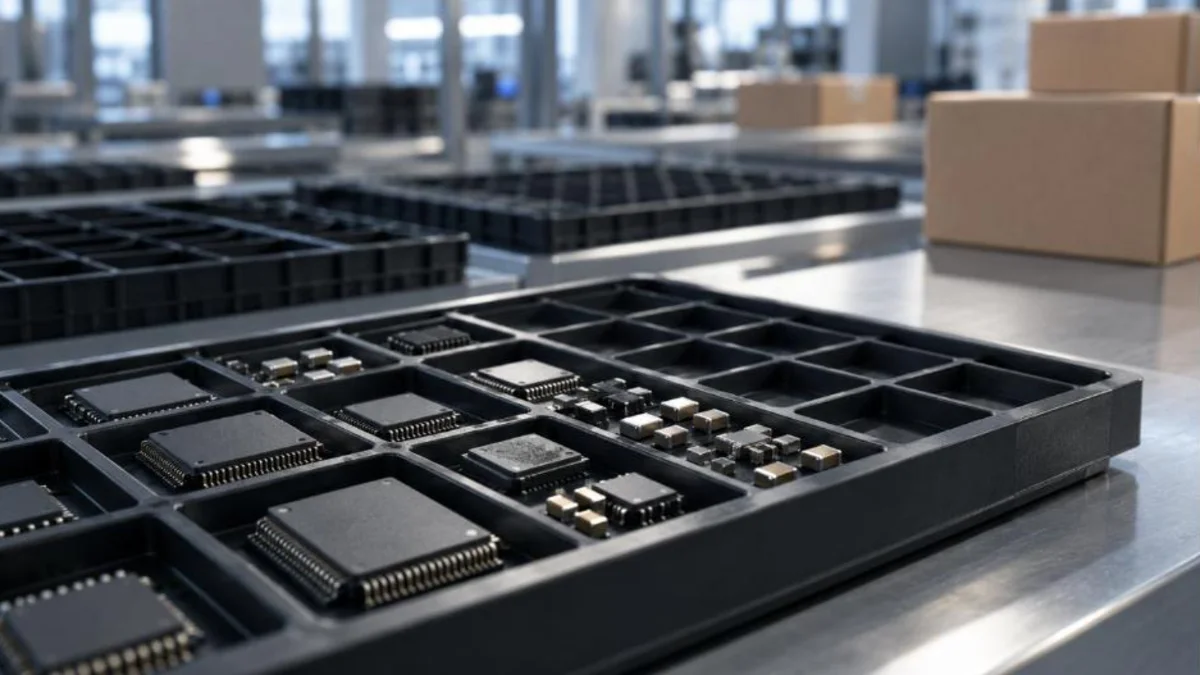
If you’re planning to buy Apple’s most expensive Pro iPhone yet, the report about iPhone 18 Pro orders might make you pause. On October 9, 2026, Nikkei Asia reported that Apple had reduced October component orders for the Pro and Pro Max by at least 15% after demand disappointed following a $100 price rise. Apple has not confirmed the cuts, and there is no announced reduction in its retail prices.
For you, the immediate options are existing carrier discounts and shorter reported waits for the Pro, rather than a guaranteed price drop. Here are the key details before you decide whether to buy.
| Detail | What we know |
|---|---|
| What happened | Apple reportedly reduced orders for parts |
| Who reported it | Nikkei Asia on October 9, 2026 |
| Size of cut | At least 15%, with one source putting October’s reduction at 15% to 20% |
| Models affected | iPhone 18 Pro and Pro Max |
| Reason given | Disappointing demand following higher prices linked to memory costs |
| Prices | US starting prices of $1,199 for Pro and $1,299 for Pro Max |
| Apple’s response | No confirmation or public comment on the report |
| Stock reaction | Shares fell 1.6% before trading opened and about 2.4% shortly after |
What the Nikkei Report Says
You see, the comparison here is with the component quantities Apple originally requested from suppliers. Coverage of Nikkei’s report describes disappointing demand from late August through October, with Apple becoming more cautious about shipment plans in early September. To understand what that means for your purchase, these are the details worth separating.
- At least 15% fewer parts. The reported reduction covers components for both Pro models compared with Apple’s initial requests. One unnamed executive put the October decrease between 15% and 20%.
- October is the period identified. Some suppliers were expected to feel the cuts in that month’s volumes, depending on how far ahead their components had to be ordered.
- November remains uncertain. The reporting does not establish whether Apple will reduce orders again from November. You cannot read this as a confirmed plan for the rest of the year.
- The sources were unnamed. Nikkei’s account relied on several people whose identities were not published, rather than an announcement from Apple.
- Reuters could not verify the claims immediately. Its coverage relayed Nikkei’s findings without independently establishing that the reductions had happened.
- Apple had not responded. Reuters sought comment outside business hours, while Fortune also reported receiving no response.
- The iPhone Duo could face cuts too. One source expected similar reductions for the foldable, but that remains an expectation rather than a confirmed decision.
Keep one distinction in mind when you read the headline. Component orders tell you about parts being requested, not how many phones customers bought. A reported 15% order reduction does not establish a 15% fall in sales, and Apple does not publish iPhone unit sales figures.
Why Demand for the iPhone 18 Pro Cooled
If you’re hesitating over an upgrade, the reported demand problems may sound familiar. You’re being asked to pay more for changes that analysts describe as relatively modest, while other iPhones are still on the way. Here are the four factors that help explain the slower start.
A $100 Price Rise Driven by Memory Costs
You now pay $100 more for either Pro model than for its predecessor. TrendForce estimated that parts for the 256GB iPhone 18 Pro cost around 38% more than last year’s model, largely because of memory costs.
The pressure goes beyond your next phone. J.P. Morgan expects DRAM prices to climb more than 400% between the start of 2024 and the end of 2026. Tim Cook described the memory price surge as an exceptionally rare shock, and Apple had already raised Mac and iPad prices in June. We explain the wider squeeze in our guide on why phone prices are going up.
No Standard iPhone 18 This Fall
If you wanted a standard iPhone 18, this autumn’s lineup gives you a reason to wait. That model is expected in spring 2027 alongside the iPhone 18e and a second-generation iPhone Air.
A supply-chain manager told Nikkei that demand was weaker than in years when Apple released the full range together. Suppliers cautioned, though, that the staggered releases do not fully explain the slowdown.
A Modest Upgrade Over the 17 Pro
Already own a 17 Pro? You get a faster chip and changes to the main camera, but Forbes described this year’s update as a smaller step after the previous generation’s redesign. Both new Pro models retain 12GB of RAM, matching their predecessors.
Analyst Jeff Pu pointed to modest specification changes and higher prices as reasons for subdued interest. His concerns were particularly relevant if you were considering a higher-storage version.
The iPhone Duo Pull
You may have another reason to hold off if you want a foldable. The $1,999 iPhone Duo opens for pre-orders on October 16 and goes on sale October 23.
Analyst Gene Munster sees the Duo as an uncertain factor in Apple’s sales outlook. It could draw purchases away from the Pro range, although the report does not establish how many buyers are waiting for it.
iPhone 18 Pro Prices and Storage Options
Your US price starts at $1,199 for the 256GB iPhone 18 Pro, with the Pro Max starting at $1,299. Both offer 512GB, 1TB and the newly added 2TB capacity, though the table below compares only the entry and highest storage tiers. Apple’s separate Klarna-run Apple Upgrade lease starts at $34.99 a month over 24 months. Here is how the purchase prices and advertised monthly payments compare.
| Model | 256GB | 2TB | Monthly (Apple) | Change vs 17 Pro |
|---|---|---|---|---|
| iPhone 18 Pro | $1,199 | $2,399 | From $49.95 over 24 months | Base price up $100 |
| iPhone 18 Pro Max | $1,299 | $2,499 | From $54.12 over 24 months | Base price up $100 |
What Changed From the iPhone 17 Pro
If you’re upgrading from a 17 Pro, the main changes are in processing power, camera control and cooling. You get a new chip and an adjustable main-camera aperture, while RAM stays the same. Here are the specifications to compare with what you already own.
| Feature | iPhone 18 Pro / Pro Max |
|---|---|
| Chip | A20 Pro built on a 2nm process, with Apple claiming up to 40% faster GPU performance than A19 Pro |
| Main camera | 48MP camera with a variable aperture ranging from f/1.48 to f/4 |
| Telephoto | 48MP telephoto camera offering up to 8x optical-quality zoom |
| Cooling | You get triple the 17 Pro’s vapor-chamber surface area, helping performance during prolonged use improve by as much as 40%. |
| RAM | 12GB on both models, unchanged from the 17 Pro range |
| Battery | Apple rates eSIM-only models for up to 36 hours of video playback on Pro and 45 hours on Pro Max |
| Modem | Apple C2 on Pro in all markets and on Pro Max outside the US |
| Colors | Black, silver, glacier and burgundy |
Already bought one and hearing odd audio? Our fix guide for iPhone 18 Pro speaker crackling walks you through it.
How Wall Street and Analysts Read It
You might read the order cuts as a sign that the entire launch is struggling. The analyst reports are less conclusive, with different signals for the Pro, Pro Max and upcoming Duo. Here is how the figures fit together.
- Stock reaction. Apple shares dropped 1.6% in premarket trading on October 9 and were down about 2.4% shortly after the market opened. Even then, they remained nearly 8% above their level at the September iPhone event.
- Delivery estimates. Gene Munster reported that Pro wait times had shortened by 31%, while Pro Max waits had grown by 1%. Taken together, the two models were roughly tracking the previous year’s lineup.
- Production expectations. Jeff Pu lowered his Pro and Pro Max build estimate to 72 million units, citing limits on variable-aperture camera production. He had separately described pre-order interest as subdued.
- Different Duo estimates. Pu expected 6 million Duo units to be built during 2026, while Munster expected around 20 million units in its first year. Those figures cover different periods, so you cannot compare them directly.
- Recent financial results. Apple entered this launch after a record June quarter, with revenue of $109.4 billion, up 16%. Its iPhone revenue rose nearly 22%.
- A weaker phone market. IDC projected a 16.7% decline in global smartphone shipments during 2026, alongside a 27.6% rise in the average selling price to $581.
Treat delivery estimates as a rough clue, since your wait depends on both available supply and customer demand.
Will the iPhone 18 Pro Get Cheaper
You have no confirmed Apple price reduction to wait for based on this report. You can already reduce your cost through eligible carrier offers or a trade-in, though the advertised saving depends on the conditions you meet. These were the main US offers in early October 2026.
| Provider | Advertised saving | Main conditions |
|---|---|---|
| AT&T | Up to $1,200 | You must qualify for an upgrade through Next Up Anytime or switch carriers and trade in your iPhone, regardless of its condition. |
| T-Mobile | Up to $1,200 | Qualifying trade-in or switching offer on Experience Beyond |
| Verizon | Up to $1,200 on a new line or $1,020 on an upgrade | Eligible trade-in, with a myPlan line required for the new-line offer |
| Xfinity Mobile | Up to $1,300 | Eligible trade-in |
| Visible / Straight Talk | Up to $480 | $20 monthly credits across 24 months |
| Apple Trade In | $175 to $885 | Eligible iPhone 13 or later, with credit depending on your device |
- Check the full cost. Carrier savings generally arrive as bill credits over 24 to 36 months and require qualifying plans. Before you choose an offer, compare the required plan cost and credit period with what you currently pay.
Buy Now, Wait, or Pick Something Else
Your next move depends more on the phone you own than on Apple’s reported component cuts. A smaller parts order does not tell you whether an upgrade is worth your money. Use these five options to decide what makes sense for you.
- Buy now if your older iPhone needs replacing. If you use an iPhone 13 or earlier, consider whether the camera features and advertised battery life address your needs. An eligible carrier credit could make the purchase easier to justify, provided the required plan suits your budget.
- Wait if your 17 Pro still does the job. You already have the same 12GB of RAM, and analysts describe this generation’s changes as relatively modest. Give yourself a specific reason to upgrade before spending more.
- Consider the Duo if you want a foldable. You will need a budget starting at $1,999, with pre-orders opening October 16. Remember that it lacks the Pro models’ 8x telephoto capability, so the folding screen comes with a camera trade-off. Our iPhone Duo pre-order guide covers the dates and colors.
- Wait for spring 2027 if you want the standard iPhone 18. That model, the iPhone 18e and a second-generation iPhone Air are expected then. Their arrival would give you more models to compare before committing.
- Compare the other iPhones already listed for sale. Apple’s range includes the iPhone 17, iPhone Air, iPhone 17e and iPhone 16. Check their current prices against your actual needs rather than assuming you need a Pro.
Android Phones Worth a Look
If you’re open to Android, put the Galaxy S26 Ultra, Pixel 11 Pro and Galaxy S26 on your comparison list. In an Android Authority reader poll, those models received 60%, 16% and 9% of votes respectively as alternatives to the 18 Pro. Treat that as reader preference, not a verdict on which phone suits you.
You will find price rises here too. The Pixel 11 range starts at $899, up from $799 for the previous generation, while Samsung announced increases of at least $100 across the Galaxy S26 range. If you can hold off longer, see what the Galaxy S27 price leak suggests.
Which Older iPhones Lose Updates
Before you replace your phone over update concerns, check the post-release compatibility list. Tom’s Guide’s post-WWDC reporting lists iOS 27 support for the iPhone 11 and later, plus the 2020 and 2022 iPhone SE.
Earlier leaks suggested some of those models would lose support, but that conflicts with the later list. If you own an older model, it falls outside the reported iOS 27 list, which does not by itself establish when all security updates end.
What to Watch Over the Next Few Months
You do not need to make your decision from one supply-chain report. A few upcoming developments could help you judge your options, so keep these on your radar.
- Duo availability. Check pre-orders on October 16 and the retail launch on October 23 if you want to compare the foldable with a Pro.
- November component orders. Watch for reporting on whether Apple makes further reductions or leaves its plans unchanged.
- Apple’s smart home launches. Our Apple October event 2026 guide covers what Apple is expected to show next.
- Apple’s next earnings update. Look for comments about demand and expectations for the December quarter.
- Holiday carrier offers. Compare any new promotions with today’s deals, including the required plan and the full credit period.
- Spring 2027 releases. Follow announcements about the standard iPhone 18, iPhone 18e and next iPhone Air before treating expected launch plans as final.
For now, start with what your current phone cannot do and check the total cost of fixing that through an upgrade. If it still meets your needs, give yourself time to compare the next releases and offers. You can make a good purchase without rushing to respond to a headline.
FAQs
No, Apple has not confirmed a production cut or responded publicly to the reported reductions. The claims concern component orders and come from unnamed sources cited by Nikkei Asia. You should treat them as unconfirmed, particularly since Reuters could not immediately verify them.
You pay from $1,199 for the 256GB iPhone 18 Pro, while the Pro Max starts at $1,299. At 2TB, those prices reach $2,399 and $2,499 respectively. Both entry models cost $100 more than their predecessors.
The iPhone 18 Pro could be a worthwhile upgrade if you want its variable-aperture main camera, 8x optical-quality zoom or A20 Pro chip. Whether those features justify the cost depends on what you need from your current phone. If your iPhone 15 or 16 still meets those needs, the reported order cuts alone give you no reason to replace it.
There is no announced Apple price cut linked to the reported demand slowdown. You can already find eligible carrier discounts and trade-in credits, but these do not change Apple’s listed starting prices. Check the required plan and payment period before treating an advertised discount as your total saving.
The standard iPhone 18 is expected in spring 2027 rather than 2026. Reports place it alongside the iPhone 18e and a second-generation iPhone Air. If you want the standard model, you will need to wait for Apple to confirm those plans.
If your iPhone predates the iPhone 11, it falls outside the reported iOS 27 compatibility list, except for the supported 2020 and 2022 iPhone SE models. Tom’s Guide’s post-WWDC list includes the iPhone 11 and newer. Missing iOS 27 does not, by itself, tell you when all security updates will end.
