

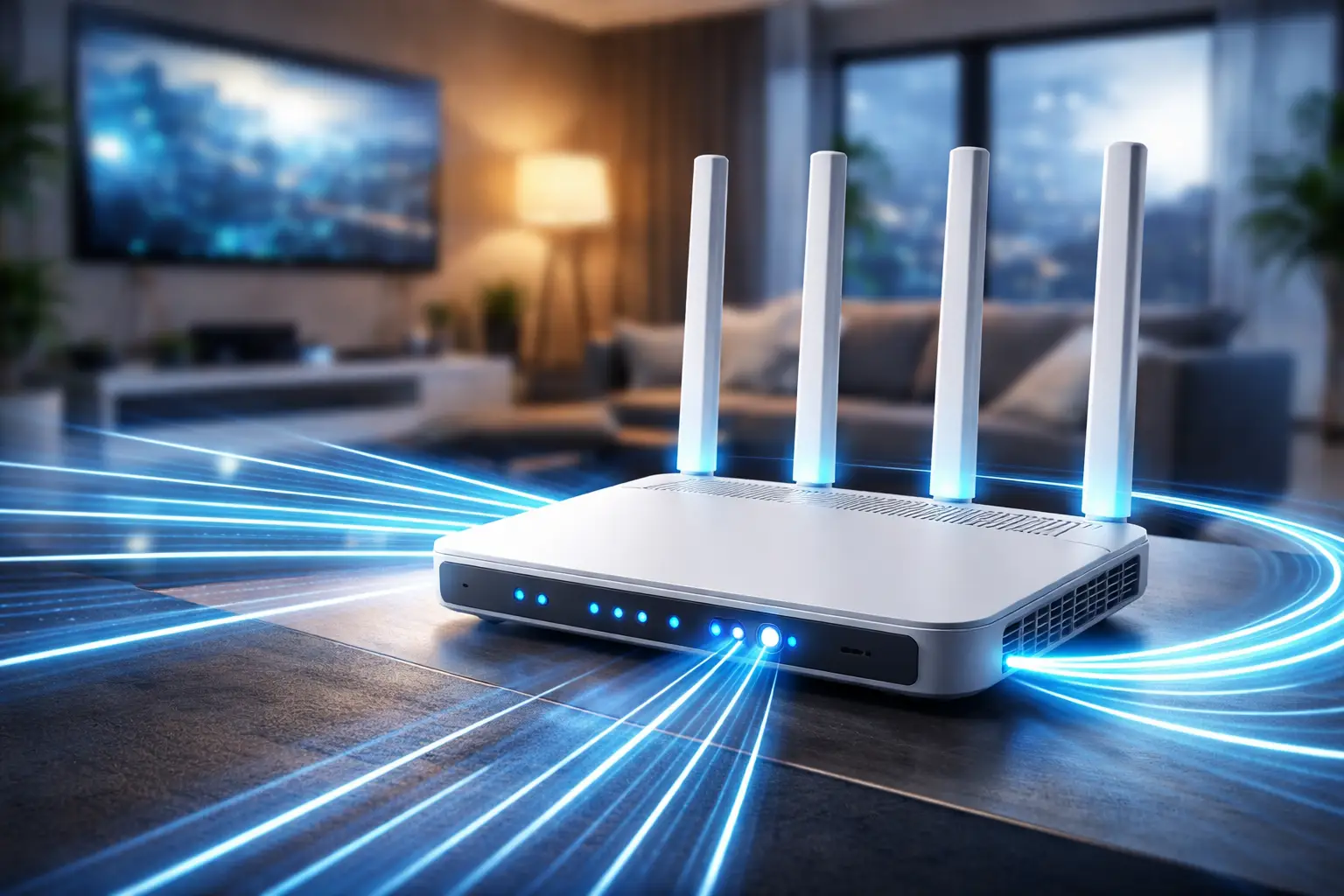
You have likely noticed how wireless technology changes every few years to keep up with your growing digital demands. WiFi 8, known technically as IEEE 802.11bn, arrives as the successor to the current WiFi 7 standard. This transition represents more than a minor update to your home network equipment.
Wireless development used to center on hitting the highest possible peak speeds during testing. Engineers now prioritize consistent reliability over those theoretical maximums. This strategy ensures that your connection remains strong even when the environment becomes difficult or crowded with other devices.
The central ambition for WiFi 8 involves providing a wired-like experience for every user in your home or office. By achieving Ultra-High Reliability, the system aims to make wireless drops and lag spikes things of the past. You can expect a connection that feels as stable as a physical ethernet cable plugged directly into your machine.
What is IEEE 802.11bn?
IEEE 802.11bn serves as the official technical designation for this next advancement in connectivity. It builds upon the foundations of previous generations while introducing logic that handles data more intelligently. You will see this standard appearing in professional and consumer devices as the next major milestone for wireless networking.
The Ultra-High Reliability designation explains exactly what this standard intends to deliver to your devices. It means the system prioritizes keeping your data flowing without interruption or delay. For the average person, this translates to a connection that does not stutter when other people nearby start using the network at the same time.
While theoretical speeds remain impressive, the real emphasis resides in the throughput you actually experience in your daily life. Real-world conditions often prevent older standards from reaching their advertised limits because of physical obstacles. WiFi 8 solves this by making sure your usable speed stays high during your most important online activities.
Why Reliability is the New Gold Standard
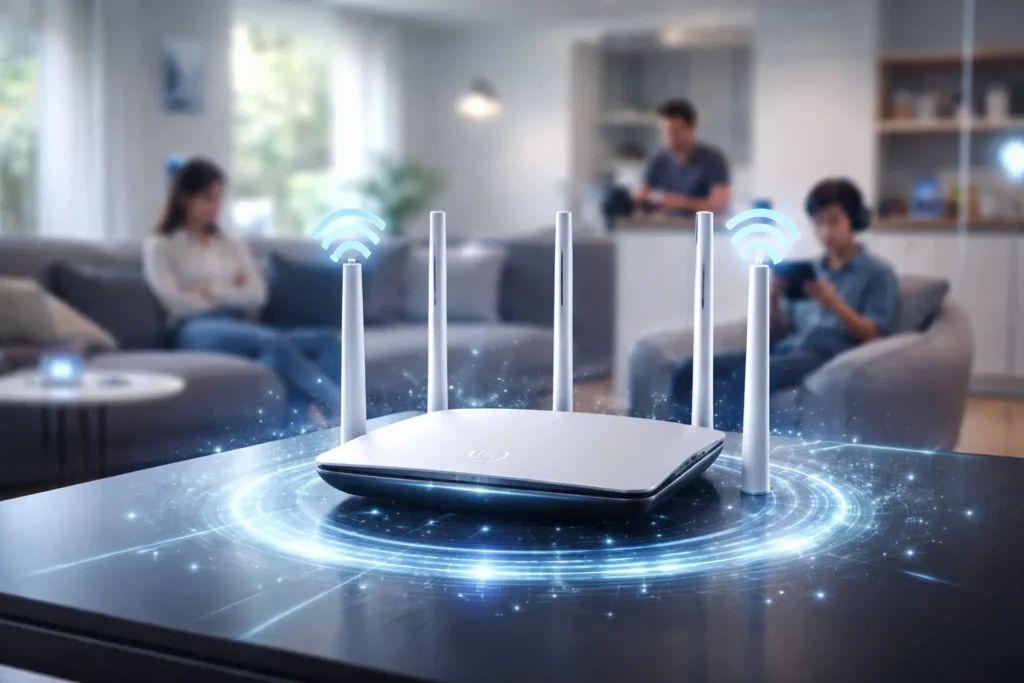
Current wireless standards often struggle when you use them in environments with many competing signals. Interference and jitter create small delays that disrupt your video calls or gaming sessions. These issues occur because current routers do not always manage crowded airwaves efficiently when neighboring networks are active.
The concept of the ugly five percent addresses the small but frustrating moments when your internet feels like it is failing. These are the instances of sudden packet loss or lag that happen even if your signal bars look full. WiFi 8 targets these specific failures to ensure your experience remains smooth every second you are online.
Modern applications such as cloud computing, artificial intelligence, and remote surgery require extreme stability rather than just raw volume. Stability becomes more vital than speed when a single millisecond of delay can disrupt a medical procedure or a complex calculation. You need a connection that stays steady regardless of the surrounding network traffic in your area.
5 Breakthrough Technical Innovations in Wi-Fi 8

Wireless engineers developed several new methods to ensure your connection never falters during use. Below are the primary technical advancements that make this stability possible.
1. Multi-AP Coordination
Routers will now function as a unified team rather than competing against each other for bandwidth in your home. In older systems, nearby access points often caused interference by trying to talk over one another. This new coordination ensures that all hardware in your home or office works in harmony to support your devices.
Coordinated Beamforming allows multiple access points to direct signals at your device with extreme precision. This method minimizes the noise that usually leaks into other parts of the room. By working together, the routers ensure your signal is strong without creating problems for other users who are sitting nearby.
Coordinated Spatial Reuse enables nearby routers to talk to each other to adjust their power levels. This allows them to send data at the same time on the same frequency without drowning each other out. Your network becomes much more efficient because it no longer has to wait for a completely clear path to send information.
2. Dynamic Sub-Channel Operation
This technology allows the network to intelligently reassign frequency bands in real time based on current traffic. If one part of the signal path becomes blocked or noisy, the system moves your data to a cleaner section instantly. You will notice fewer slowdowns because your data always finds the path of least resistance.
The capacity for an eight hundred percent boost in throughput efficiency exists by bypassing sub-channels that suffer from congestion. Instead of trying to force data through a busy frequency, the router uses every available gap in the airwaves. This ensures that no bandwidth goes to waste even in the busiest environments where many people are connected.
By constantly monitoring the environment, the system avoids parts of the spectrum that contain interference from other household electronics. This proactive management keeps your connection clear of the electronic noise that often slows down older routers. You get a cleaner signal that maintains its performance through the entire day regardless of what other electronics are running.
3. Non-Primary Channel Access
Historically, wireless systems faced a bottleneck where a single primary channel had to be clear before the rest of the bandwidth could be used. If that main channel was busy, your entire connection had to wait its turn. This limitation often caused unnecessary delays even when other parts of the frequency were wide open.
Non-Primary Channel Access allows your data to flow even if the main channel is currently occupied by another device. Your router can use any available part of the frequency to start sending your information immediately. This flexibility ensures that your devices do not have to sit in a digital waiting room while other packets are processed.
This capability prevents network stalls that typically occur in crowded apartment buildings or offices where many people share the same airwaves. You will find that your internet feels more responsive because the router no longer stops everything for a single busy signal. It keeps your data moving by using every open lane on the digital highway.
4. Granular Modulation and Coding Schemes
New improvements in how data is encoded help prevent the sudden drops in performance known as speed cliffs. Older systems often had large gaps between their speed settings, causing a massive slowdown if the signal weakened slightly. These new schemes add more steps to ensure your speed stays as high as possible at all times.
This ensures a much smoother transition in performance as you move further away from your router. Instead of your speed falling off a cliff, it decreases gradually and stays usable. You can maintain a high-quality connection even as you move from room to room in your home without experiencing a total loss of signal.
The encoding also handles signal errors more gracefully, which keeps your connection stable in difficult areas. If the signal becomes slightly blocked by a wall or furniture, the system adjusts its coding to keep the data moving. You get a more resilient link that adapts to the physical environment of your house or office.
5. Enhanced Long Range Capabilities
The standard prioritizes maintaining signal integrity even at the extreme edges of its coverage area. You will experience fewer disconnected sessions when you are far from the base station in your home. The system uses better processing to pull usable data out of very weak signals that older routers would ignore.
This advancement has a major impact on large properties and outdoor spaces where coverage is usually spotty. You can now enjoy a reliable connection in your backyard or a detached garage without needing extra equipment. The signal stays strong enough to support high-definition video even at a distance from the main router.
In warehouse environments or large retail spaces, this technology ensures that mobile devices stay connected as they move through the building. Workers can use handheld scanners or tablets without worrying about losing their link to the main server. This reliability supports better productivity in professional settings where coverage is traditionally difficult to maintain.
Performance Metrics Comparing Wi-Fi 8 to Wi-Fi 7
The design goals for this new standard involve a twenty-five percent improvement in throughput when interference is present. This means your real-world speeds will stay closer to the maximum even when your neighbors are using their own networks heavily. You get more of the speed you pay for in actual daily use rather than just in a testing lab.
Engineers also target a twenty-five percent reduction in the worst-case latency scenarios. By addressing the highest levels of lag, the system ensures that your connection feels snappy even during peak usage times. This reduction in delay makes a massive difference for activities that require instant responses such as online gaming or video calls.
You will also see a decrease in dropped packets while you are moving between different access points in a mesh system. This improvement in roaming ensures that your video calls do not freeze when you walk from the living room to the office. The handoff between routers becomes so fast that your devices never realize a change occurred.
Wi-Fi 7 vs. Wi-Fi 8: Key Differences at a Glance
Comparing these two standards reveals that the main difference lies in their primary goals rather than their top speeds. While the previous version was about opening up new lanes and expanding raw volume, this update is about making those lanes work perfectly. It represents a transition from building a faster car to building a better road system.
The maximum theoretical speed remains at forty-six gigabits per second, which matches the previous generation. However, your user experience will improve because the system manages that speed more successfully in crowded areas. You will find that your devices reach high speeds more often than they did with older hardware.
The spectrum usage continues to span across the two point four, five, and six gigahertz bands. There is also an extension up to seven point two five gigahertz to provide even more space for your data to travel. This wide range of frequencies ensures that your network has plenty of room to operate without getting crowded by other devices.
5 Real-World Use Cases for Ultra-High Reliability

Ultra-High Reliability opens the door for technologies that previously struggled with wireless lag. Below are several ways this new standard will change how you use your devices in your daily life.
1. The Future of Immersive AR VR XR
Near-zero latency is mandatory to prevent motion sickness when you use virtual reality headsets. If the image on the screen lags behind your head movements even slightly, your brain notices the disconnect. This standard ensures that the data moves fast enough to keep the experience perfectly synchronized with your physical senses.
Wireless tethering for high-end headsets becomes much more practical with this level of reliability. You will no longer need to trip over cables while exploring a digital environment in your living room. The connection remains stable enough to handle the massive amount of data required for high-resolution 3D graphics without any stuttering.
These headsets can finally become truly mobile and easy to use for everyone in the family. By removing the need for a physical wire, the technology becomes much more accessible for gaming and professional training. You get the freedom to move without sacrificing the quality of the visual experience.
2. Mission-Critical Industrial Automation
Robotics and automated guided vehicles in factories depend on a connection that never breaks. Even a split-second loss of signal can cause a machine to stop or result in a collision on the factory floor. This standard provides the certainty needed to run an entire production line wirelessly with full confidence.
Zero-downtime connections are equally important for e-Health applications and remote monitoring of patients. Doctors can rely on wireless sensors to provide real-time data without fearing a signal drop during a critical moment. This level of stability allows medical professionals to monitor health metrics with the same confidence as a wired system.
The technology ensures that critical systems remain online even in environments with heavy machinery that usually causes interference. You can deploy sensors and controllers in places where wiring would be too expensive or difficult to install. This flexibility helps businesses modernize their operations without a massive infrastructure overhaul.
3. High-Density Living and Public Venues
People living in crowded apartment complexes often suffer from slow internet because so many routers are fighting for the same space. This standard solves that problem by allowing your router to coordinate with those around it in the building. You will enjoy a stable connection even if there are dozens of other networks in your immediate vicinity.
Stadiums and airports will maintain stable speeds for thousands of simultaneous users during large events. Instead of the internet slowing to a crawl when a crowd gathers, the network will manage the load efficiently. You can share videos or check flight details without waiting for a signal to become available.
This improvement ensures that public infrastructure remains useful as more people rely on mobile data for their daily needs. Venues can offer a better experience for guests without needing to install thousands of miles of new cables. The wireless environment becomes much more orderly and reliable for everyone involved.
4. The Next-Gen Smart Home Ecosystem
The explosion of smart devices can often overwhelm a standard home router. When you have hundreds of sensors, lights, and cameras all trying to talk at once, your streaming video can suffer. This standard manages all those small data requests without slowing down your main entertainment stream.
Multi-AP coordination plays a massive role in eliminating dead zones in large homes with multiple floors. By allowing your mesh nodes to talk to each other more successfully, the system ensures a strong signal in every corner. You no longer have to worry about your smart doorbell losing its connection because it is too far from the hub.
Your smart home will become more responsive because the commands do not have to wait in a long digital queue. Lights turn on instantly, and security feeds load without a delay when you check your phone. This creates a seamless living environment where the technology works quietly in the background without requiring your attention.
5. Professional Gaming and Real-Time Collaboration
The elimination of lag spikes is a major victory for anyone who enjoys competitive gaming. A sudden jump in latency can be the difference between winning and losing a match. This standard ensures that your connection remains flat and predictable throughout your entire gaming session.
High-definition video conferencing also benefits from this stability during real-time collaboration. You will notice fewer frozen screens and audio glitches when talking to colleagues across the country. This makes remote work feel more natural and less draining than it does on unreliable connections that cut in and out.
Cloud-based creative work becomes much faster when you can upload and download large files without interruptions. Designers and editors can work on shared projects with the same speed as if the files were on their own hard drive. You get the benefits of the cloud with the reliability of a local connection.
When Can We Expect Wi-Fi 8?
Chipset developers like Broadcom, MediaTek, and Qualcomm are already working on the hardware that will power the first generation of these devices. They are building the specialized processors needed to handle the complex coordination and sub-channel management that the standard requires. These early steps are necessary before any consumer products can be manufactured.
The “Draft” stage of the standard is expected to arrive in 2026, which is when we will see the first wave of routers and high-end laptops supporting these features. While these early devices will be powerful, they will appear before the rules are completely finalized. This is a common pattern in the tech industry that allows early adopters to get a head start on the latest performance.
The final formal ratification of the IEEE 802.11bn standard is currently scheduled for September 2028. This is the date when the technology will be fully mature and ready for wide-scale adoption in the enterprise and government sectors. From that point forward, Wi-Fi 8 will become the standard expectation for all new electronic devices on the market.
Preparing Your Infrastructure for the Wi-Fi 8 Era
You will eventually need to purchase new hardware to take full advantage of these advancements in wireless technology. While your current equipment will still function, only WiFi 8 certified routers and devices can use the new coordination features. Upgrading your router is the first step toward a more reliable home network experience.
Backward compatibility ensures that your older devices will still connect to a new router without any issues. You do not have to replace every phone and laptop in your house immediately to keep your internet working. However, those older devices will not see the same reliability benefits as newer hardware that supports the standard.
Utilizing these internal network improvements also requires a high-speed internet plan from your service provider. If your incoming connection is slow, a faster router can only do so much to improve your overall experience. Pairing a multi-gigabit plan with your new hardware will ensure you get the best possible results from the system.
Potential Challenges and Adoption Barriers

The cost of early adoption often remains a barrier for many consumers and businesses. New technology typically carries a higher price tag during its first few years on the market. You may decide to wait until the hardware becomes more affordable and widely available before making the switch for your home.
Regulatory decisions regarding how frequencies are shared in different regions can also slow down global adoption. Each country has its own rules about which parts of the airwaves are available for public use. These variations mean that some features might arrive in certain areas before others depending on local laws.
Some users may perceive a sense of diminishing returns if they already have high-speed internet that works for them. Convincing people that they need more reliability when their current connection seems fine can be a difficult task. The true value becomes apparent only when you experience the lack of lag and drops in a crowded environment.
A New Era of Wireless Certainty
This upcoming standard proves that the future of wireless is not about chasing higher numbers on a box. It is about providing a better connection that stays strong when you need it most for your work and play. You are moving toward a time where wireless technology is finally as dependable as a physical wire.
The introduction of coordination between routers will change your expectations for how a network should behave in your house. No longer will you accept dead zones or sudden slowdowns as a normal part of your digital life. Wireless stability will become a standard feature that you can count on in every environment you visit.
In the end, this advancement finally closes the gap between the freedom of a wireless signal and the reliability of a physical cable. You can enjoy the best of both worlds without making any sacrifices in your connection quality. It represents a new chapter where your connection is something you never have to think about again.
