

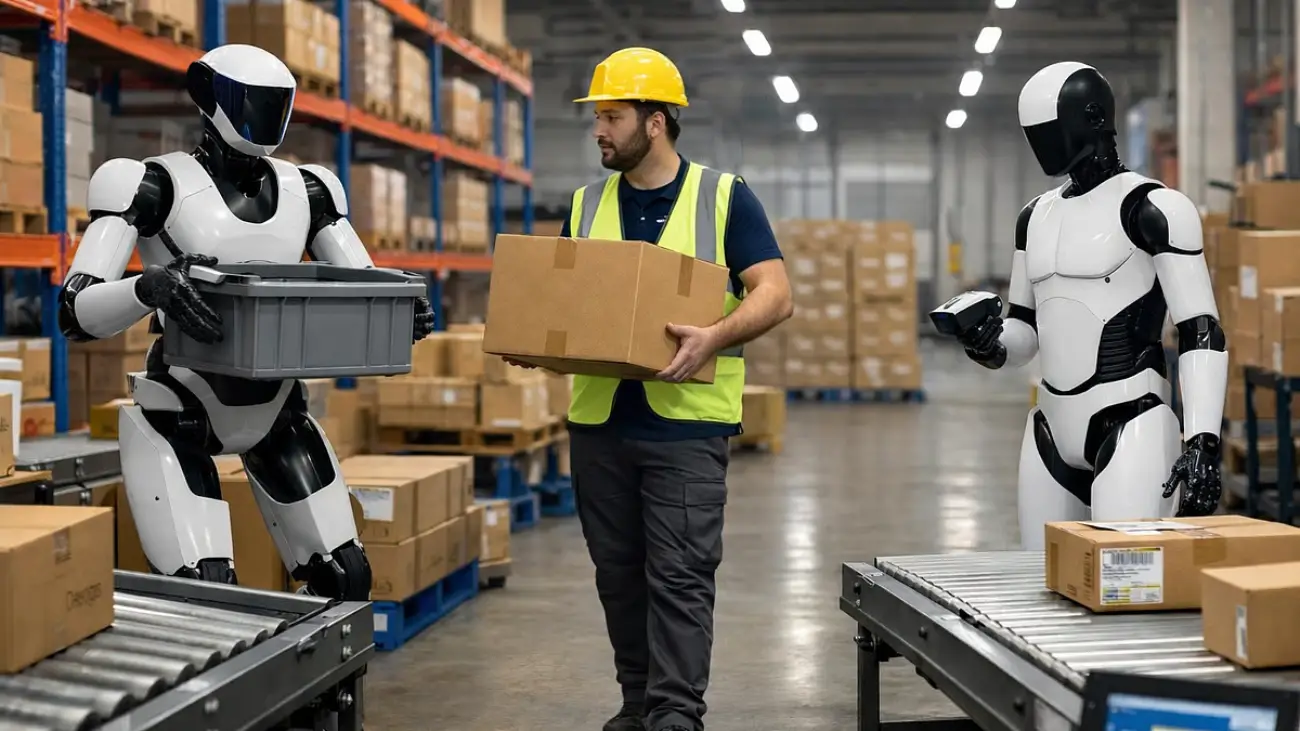
In 2026, automation has moved far beyond the massive, fenced-off assembly lines of car manufacturers. You now see robots in local grocery stores, small machine shops, and neighborhood medical clinics, working as standard tools for everyday business. This change happened because technology stopped being an elite asset for the world’s largest corporations and started becoming a common utility for everyone.
The high financial walls that kept small and medium enterprises (SMEs) on the sidelines have finally crumbled. For years, the cost of a single industrial arm or an autonomous fleet was too high for a growing business to justify. Today, those same companies are using advanced robotics because the entry price has dropped from millions of dollars to a monthly service fee that fits within a standard operating budget.
The main theme of this period is that automation is no longer about “buying” hardware; it is about “subscribing” to productivity. You no longer need to worry about the depreciation of a machine or the debt of a massive purchase. Instead, you pay for the work the robot performs, much like you pay for a software subscription or electricity, making high-tier technology accessible to any business with a clear goal.
What is RaaS?
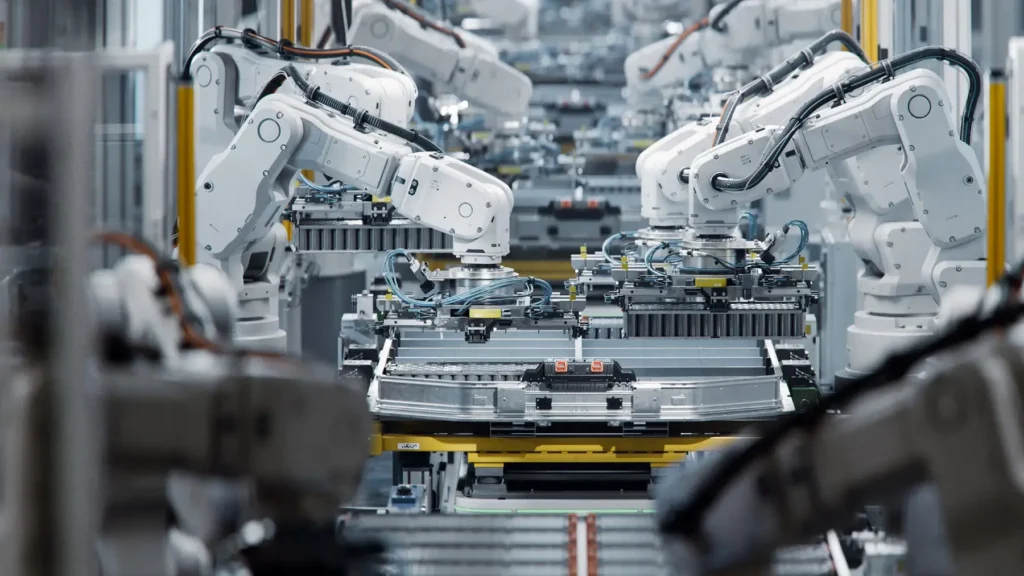
The Robotics-as-a-Service (RaaS) model works through a cloud-based, subscription-driven framework that handles the complexities of hardware management. You do not own the metal and wires; instead, you pay a provider for the output or the hours the machine is active. The provider monitors the system through the cloud, ensuring it stays updated and functional while you focus on the results it produces for your team.
This change moves robotics from a Capital Expenditure (CapEx) to an Operational Expenditure (OpEx). In the old days, you needed a massive pile of cash upfront and years to see a return on that investment. Now, the cost shows up on your monthly ledger as a predictable expense, which preserves your cash flow and allows you to use your capital for other parts of your business like hiring or product development.
Using this approach also gives you the ability to scale your robotic fleet up or down based on seasonal demand or sudden market changes. If your warehouse gets three times as busy in December, you simply add more units to your subscription for that month. When the rush ends, you send them back, ensuring you never pay for idle machines that sit gathering dust during slower periods of the year.
Why 2026 is the Tipping Point for Affordable Warehouse Automation
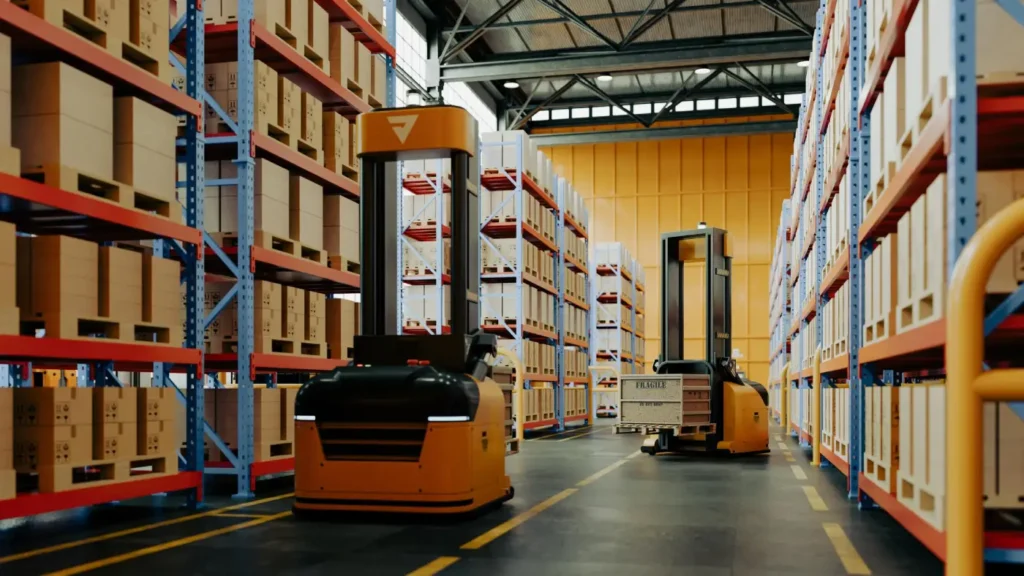
Market projections show that the RaaS market is on track to grow from a few billion dollars to over $16.5 billion by 2034. This surge in 2026 is driven by the fact that the technology has reached a level of reliability where it is no longer a gamble. Businesses are seeing that the systems work as promised, leading to a massive wave of adoption across various industries that once thought automation was out of reach.
We have entered what many call the “Pragmatic Era” of 2026, where businesses prioritize tangible ROI over experimental or flashy technology. You are likely less interested in what a robot could do in a lab and more interested in how many boxes it can move today. This grounded focus has forced providers to create tools that deliver immediate value, making the choice to automate a practical business decision rather than a tech experiment.
Labor shortages and rising operational costs have also made renting industrial robots a necessity rather than a luxury. In many regions, finding enough people to handle repetitive manual tasks has become nearly impossible. By renting robotic workers, you fill those gaps quickly, allowing your human staff to move into supervisory roles where they manage the machines rather than doing the heavy lifting themselves.
5 Ways RaaS is Leveling the Playing Field for Small Businesses
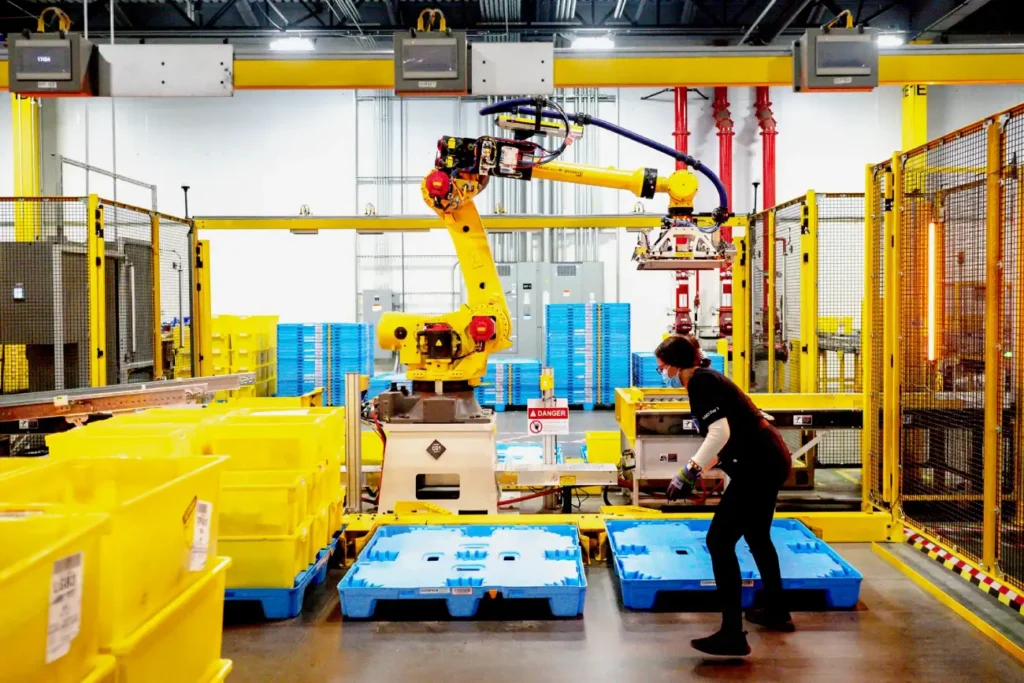
Small companies are finding new ways to stay competitive without spending their entire budget on machines. Below are the primary ways this model supports growth.
Lowering the Financial Barrier to Entry
The zero-down-payment model is perhaps the biggest advantage for a small business in 2026. You can bring a high-end picking robot into your facility without the massive initial hit to your bank account. This allows you to compete with global giants because you are using the same quality of technology they use, but you are paying for it in a way that respects your smaller scale.
Because there is no large debt involved, the risk of trying automation is significantly lower. If a specific process does not yield the results you expected, you are not stuck with an expensive piece of equipment for the next decade. This flexibility gives you the freedom to test new workflows and find the most efficient way to run your business without risking your entire financial future on a single machine.
Simplified Maintenance and Updates
RaaS providers take on the responsibility of keeping the hardware running and the software current. When you subscribe to a robot, the provider monitors its health from a distance and sends a technician or a replacement the moment a part shows signs of wear. This means you do not need to hire a team of specialized engineers just to keep your floor moving, which saves you a significant amount in salary costs.
Software improvements happen automatically through the cloud, so your robots actually get smarter while they are on your clock. You receive the latest security patches and performance tweaks without having to lift a finger. This ensures that your operations stay safe and efficient, while you keep your attention on your customers and your core business goals.
Flexible Scalability for Seasonal Demand
Businesses in sectors like e-commerce use RaaS to manage the intense pressure of peak seasons like Black Friday. You can “rent” an extra dozen robots for the few weeks when orders are at their highest and then return them once the volume returns to normal. This prevents you from over-investing in equipment that you only need for 10% of the year, keeping your overhead lean.
Rapid Deployment and “Plug-and-Play” Setup
In 2026, the setup process for new robots has become incredibly fast, often allowing for overnight integration into your existing space. Most modern units do not require you to drill holes in the floor or install expensive sensors throughout your building. They are designed to map their surroundings and start working almost as soon as they are turned on, minimizing the time your operations are paused.
Access to Cutting-Edge Tech Without Obsolescence Risks
By renting your robotic fleet, you avoid the trap of owning outdated hardware. Technology moves fast, and a robot purchased today might be obsolete in three years. With a subscription, you can regularly swap your older models for the newest versions, ensuring that your business always has the fastest, most capable tools available on the market.
The Technological Catalysts Driving RaaS Innovation
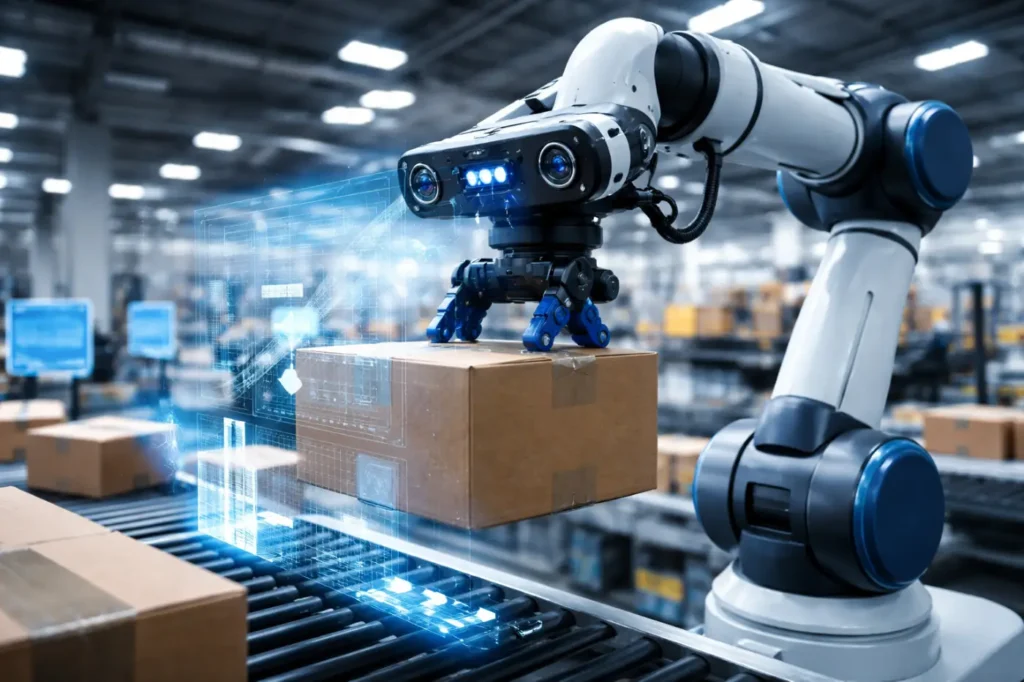
Recent breakthroughs in how machines perceive and interact with the physical world have changed what is possible. Below are the key technologies making these rented systems more effective in 2026.
Physical AI and Generative Reasoning
Robots in 2026 are using “Agentic AI” to handle messy and unpredictable environments. Instead of following a rigid script that breaks if a box is slightly out of place, these systems can reason through a situation and decide how to fix a problem on their own. This makes them much more reliable in a busy warehouse where things are constantly moving and changing.
Edge Computing for Zero-Latency Operations
The move toward processing data directly on the robot has made them faster and safer in high-traffic areas. By handling the math on the machine itself rather than sending it to a distant server, the robot can react in milliseconds to a person walking into its path. This eliminates the delay that used to make autonomous machines feel slow or hesitant in crowded spaces.
Soft Robotics for Delicate Material Handling
Advances in gripping technology have allowed RaaS providers to expand into the food, pharma, and jewelry sectors. In 2026, robots use soft, flexible materials that can pick up a ripe tomato or a fragile glass vial without causing any damage. This was a major technical barrier just a few years ago, but it is now a standard feature in many rented systems.
5G and Enhanced Cloud Integration
High-speed 5G connectivity allows you to manage an entire fleet of “rented” robots from a single centralized dashboard. Even if your robots are spread across different buildings or cities, you can see their status, performance, and health in real-time. This connectivity ensures that your service provider can also monitor the fleet and fix software issues before they cause any downtime.
Computer Vision and Spatial Intelligence
Vision-based intelligence allows autonomous forklifts and mobile robots to move through dynamic spaces with zero fixed infrastructure. They don’t need magnetic tape on the floor or reflectors on the walls to know where they are. Instead, they use advanced cameras and spatial logic to understand their surroundings just as a human does, which makes them much easier to deploy.
6 Trailblazing Startups Leading the RaaS Transition in 2026
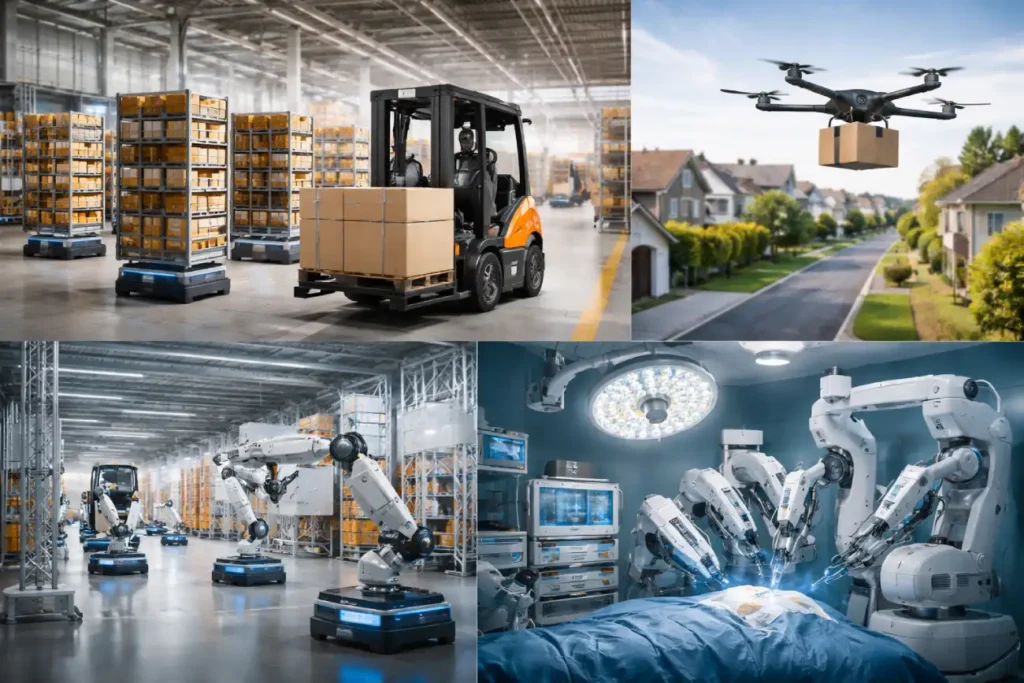
A group of innovative companies is leading the way in making these technologies available to every business. Below are the startups that are changing the industry this year.
Locus Robotics & Fetch Robotics: Warehouse Kings
Locus and Fetch have become the standard for e-commerce fulfillment through their cloud-managed autonomous mobile robots (AMRs). These machines work alongside human pickers, handling the long walks between shelves so the people can focus on the actual task of selecting items. Their RaaS model is specifically designed to scale, making them a favorite for businesses with seasonal spikes.
GrayMatter Robotics: The AI Surface Experts
GrayMatter focuses on tasks like sanding, polishing, and surface finishing that were previously too complex to automate effectively. Their robots use Physical AI to sense the texture and shape of a part, adjusting their pressure and movement in real-time to get a perfect finish. This is especially useful for manufacturers who produce high-quality metal or wood products.
Riibotics: Redefining Logistics with Vision-Based Intelligence
Riibotics has gained attention for their autonomous forklifts that can be deployed in a new warehouse in a matter of hours. Their focus is on vision-based intelligence, which allows the forklift to see pallets and obstacles with extreme clarity. This makes them much more flexible than older automated guided vehicles that required strict, pre-defined paths.
Zipline: Revolutionizing Last-Mile Delivery
Zipline has expanded from its origins in medical supplies to become a global leader in e-commerce drone delivery as a service. In 2026, they provide the infrastructure for businesses to send small packages directly to customers’ homes in minutes. By using their service, a local retailer can offer delivery speeds that rival the largest online marketplaces.
Surgitec: Democratizing Precision Healthcare
Surgitec is making high-end surgical robotics accessible to regional medical facilities through a subscription model. In the past, only the largest city hospitals could afford these multi-million dollar systems. Now, smaller clinics can offer their patients the benefits of robotic-assisted surgery without the crushing debt that usually comes with it.
FLAE Robotics: The Future of Hospitality Automation
FLAE Robotics specializes in service and reception robots that manage guest interactions in hotels and restaurants. These machines can handle check-ins, deliver room service, and answer common guest questions, which frees up the human staff to handle more personal and complex needs. Their design is friendly and intuitive, making them a welcome addition to the guest experience.
Industry-Specific Impact: Beyond the Warehouse Floor
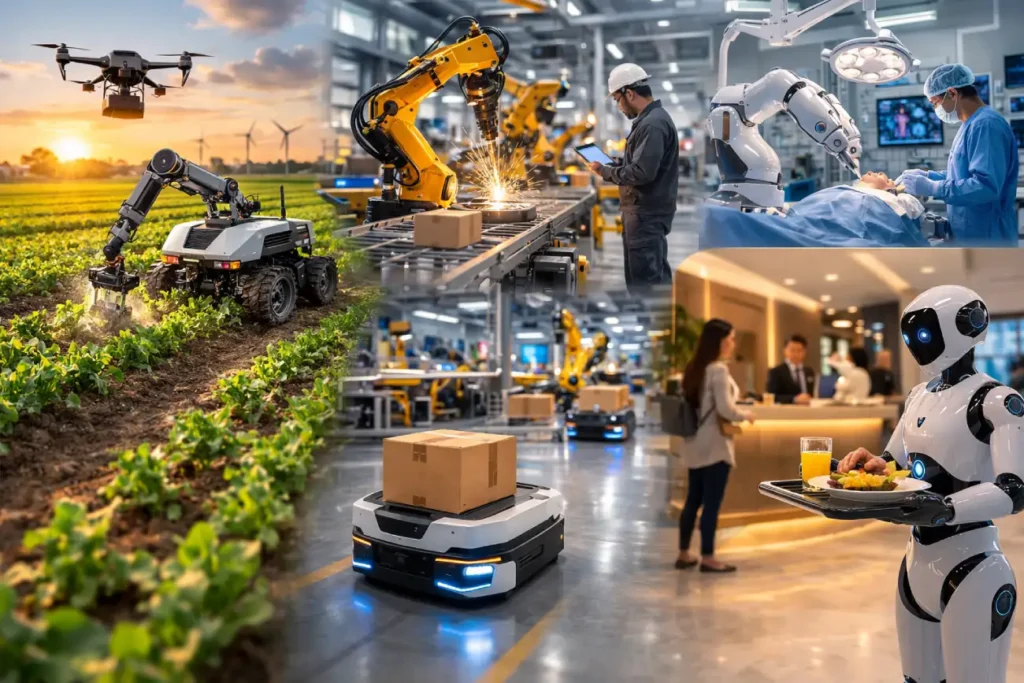
The reach of RaaS in 2026 extends into nearly every part of the economy, solving problems that were once considered too expensive to automate.
- In agriculture, startups like Heibjerg are providing “weeding-as-a-service” to help farmers manage their crops without using excessive chemicals. These robots move through fields autonomously, identifying and removing weeds while leaving the crops untouched, which lowers costs and improves soil health.
- Manufacturing has seen the rise of “lights-out” night shifts where rented robots handle the entire production process while the human staff is at home. This allows a small factory to double its output without doubling its headcount or its utility bills, as the robots don’t need the lights on to work.
- Retail and hospitality businesses are increasingly using humanoid assistants to manage inventory and provide guest services. These robots can scan shelves for out-of-stock items during the day and help customers find what they are looking for, making the shopping experience smoother for everyone.
- Healthcare facilities are using RaaS to bring sanitization and surgical robots into local clinics that previously lacked the budget for such tools. This ensures that even small-town patients have access to the most sterile environments and the most precise medical procedures available today.
Navigating the Challenges: Risks and Realities in 2026
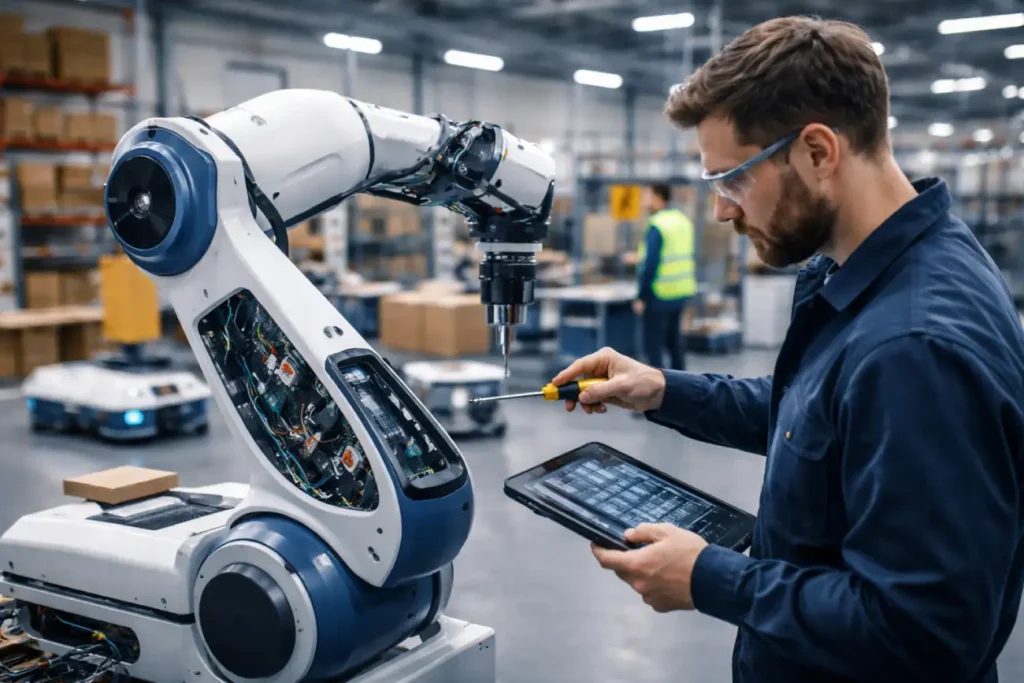
While the benefits are clear, moving toward a robot-supported business model comes with its own set of responsibilities and risks.
- Data security and privacy are top priorities, as “always-connected” robots collect a vast amount of information about your facility and your operations. Startups are solving this by using encrypted cloud tunnels and ensuring that sensitive data is processed locally whenever possible to prevent leaks.
- Geopolitical tensions have forced many companies to adopt a “dual sourcing” strategy for their robotic components. To avoid being stuck if a specific region faces a trade disruption, businesses are choosing RaaS providers that use a diverse range of suppliers for their sensors, chips, and motors.
- The human-robot synergy gap remains a challenge as teams learn to move past the fear of being replaced. The most successful businesses are those that move toward a “supervisor” model, where human workers are trained to manage and maintain the robot fleets rather than competing with them for tasks.
- Integration with existing systems is another common obstacle, as you must ensure your rented robots can “talk” to your legacy software. Most RaaS providers now offer specialized tools to connect their robots to your current ERP and Warehouse Management Systems to ensure data flows smoothly across the business.
How to Choose the Right RaaS Provider for Your Business
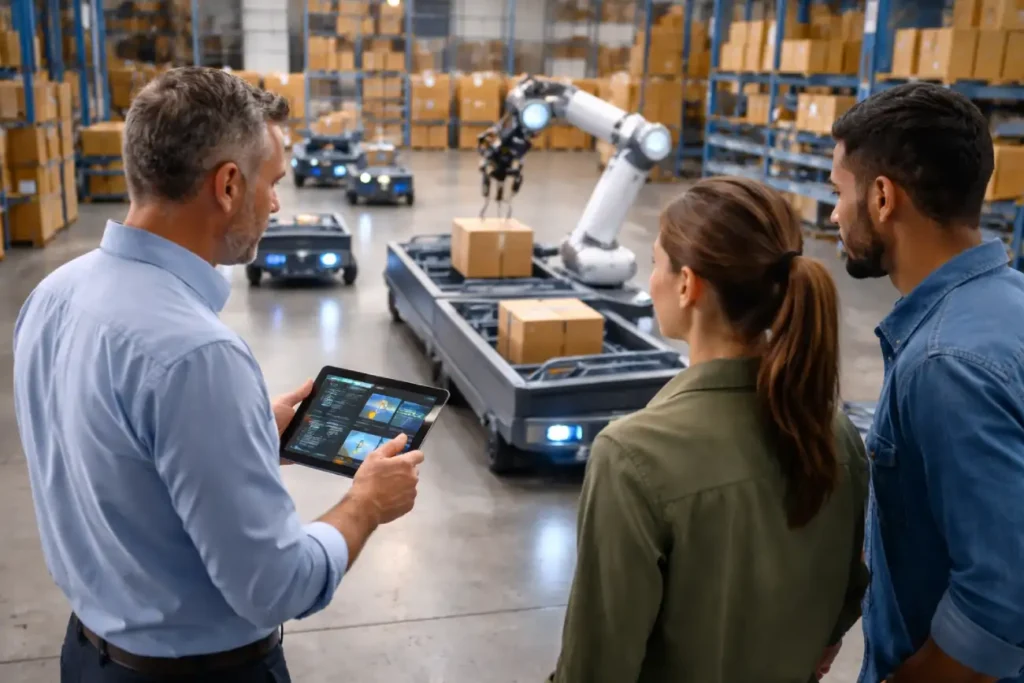
Selecting the right partner is just as important as choosing the right robot if you want to see long-term success.
Identify your specific operational bottlenecks before you start looking for a machine. You don’t want a robot for the sake of having a robot; you want a tool that solves a clear problem, such as a slow packing line or a dangerous lifting task.
Evaluate the provider’s “Full-Stack” support, which should include everything from initial training to ongoing hardware maintenance. A good RaaS partner should be just as invested in your uptime as you are, providing fast responses whenever a system needs attention.
Assess the flexibility of the contract to see if you can swap models or scale down if your business needs change. The whole point of RaaS is agility, so avoid providers that try to lock you into rigid, long-term agreements that don’t allow for adjustments.
Look for “Interoperability,” which is the ability for the rented robots to work alongside other brands of machines and your human staff. You want a system that can share the floor safely and efficiently without requiring you to use only one brand of technology for everything.
What Happens After 2026?

Looking past 2026, the move toward “Human-Robot Collaboration” will become the standard workplace dynamic across the globe. We will stop seeing robots as “special” equipment and start viewing them as basic tools, much like we view computers or smartphones today. This shift will allow businesses to be more resilient, as they can quickly adjust their workforce capacity to meet any challenge.
There is also significant potential for RaaS to move into the domestic and personal service sectors. We may soon see “home-help-as-a-service” where robots assist with cleaning or elder care on a subscription basis. This would bring the same benefits of affordability and professional maintenance to the average household, changing how we manage our daily lives.
The democratization of these tools will lead to a more flexible and resilient global economy. Small businesses will no longer be at a disadvantage when it comes to efficiency and precision. By removing the financial barriers to high technology, we are creating a future where the best ideas—not just the biggest budgets—can win in the marketplace.
