

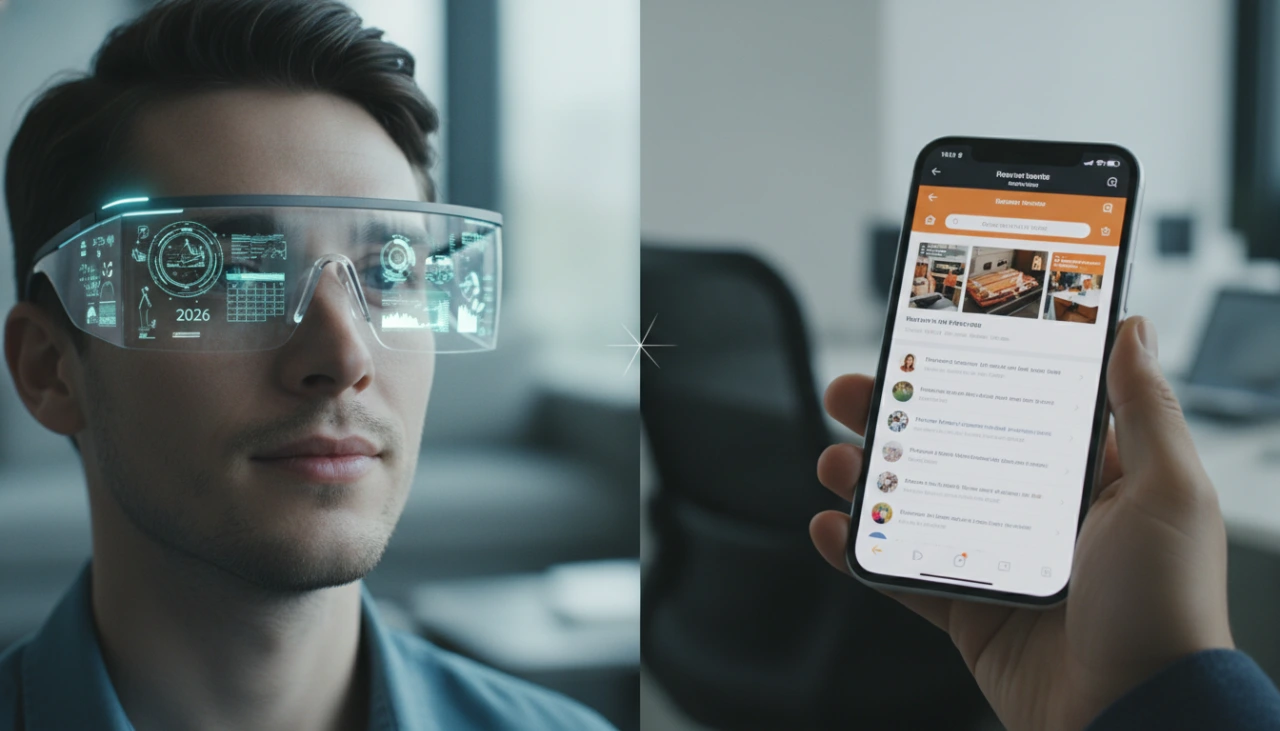
The way we interact with technology usually follows a fifteen-year cycle. We have spent over a decade staring at glass rectangles in our palms, but that experience is starting to feel stagnant. The constant need to look down at a handheld device has created a digital culture where we are often disconnected from our immediate surroundings.
Tech giants like Meta and Apple are now moving the interface from our pockets to our eyes. This change suggests that the era of looking down at a screen might be coming to a close as wearable technology matures. They are racing to create a device that provides the same power as a phone while allowing users to keep their heads up.
The central question for the next twenty-four months is whether these wearable displays can truly replace the devices we carry today. While the iPhone and Pixel are refined tools, the push toward hands-free computing is becoming more aggressive every year. By 2026, we will know if the display generation is ready to move beyond the pocket-sized slab.
Ambient vs. App-Native Computing
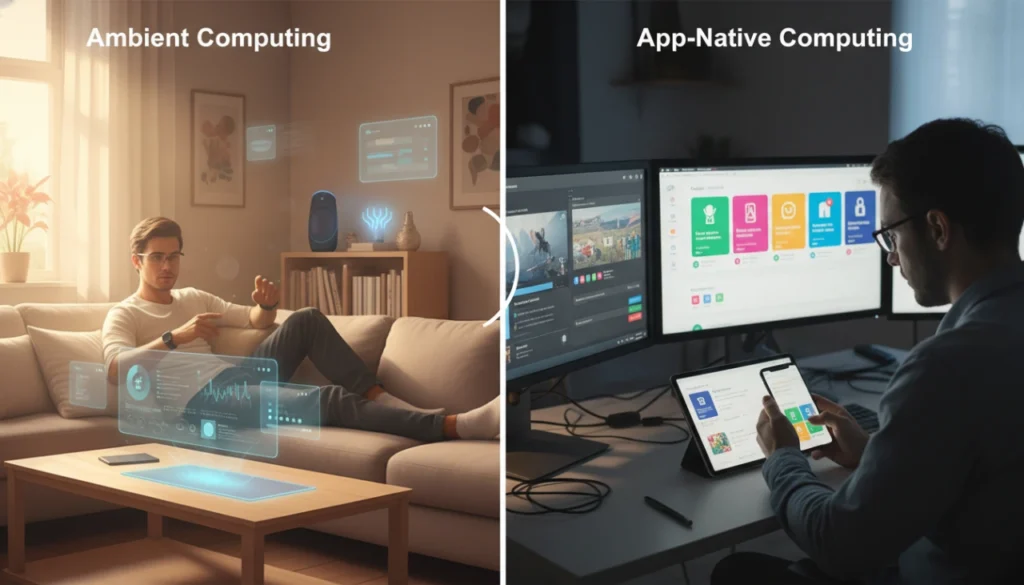
Active interaction with a handheld device requires you to stop what you are doing, reach into your pocket, and look down. Passive interaction through glasses allows data to arrive in your field of vision without interrupting your physical movement. This change moves technology from an intentional destination to a background layer of your life.
When computing becomes ambient, your physical environment becomes a digital canvas. Instead of a six-inch screen limiting your view, digital information appears anchored to the objects and spaces you see. You no longer exit your surroundings to check a map or read a message; the data simply exists alongside your reality.
AI systems built for glasses operate differently than the icon-heavy grids found on mobile systems. These systems prioritize voice, context, and visual recognition over manual tapping. They anticipate what you need based on what you are looking at, creating a system that feels more like an assistant and less like a filing cabinet of apps.
The 3-Phase Adoption Timeline: From 2024 to 2033

The first stage of this transition involves devices acting as high-tech accessories. These glasses still rely on a nearby phone to handle the heavy processing and data connectivity. During this time, they function primarily as a way to take photos, listen to audio, and see simple notifications without reaching for your device.
As we move toward the end of the decade, hardware will achieve standalone connectivity. These hybrid devices will manage the majority of your daily interactions, from taking calls to guiding you through city streets. You might still keep a phone for complex tasks, but the wearable will become the primary way you engage with the digital layer of your day.
In the final stage, the smartphone moves into the same category as the desktop computer. It becomes a specialized tool used for deep work or high-performance gaming rather than a daily necessity. By this point, miniaturization and battery improvements will allow glasses to handle every task currently performed by a mobile device.
5 Key Reasons Smart Glasses Could Outperform Smartphones
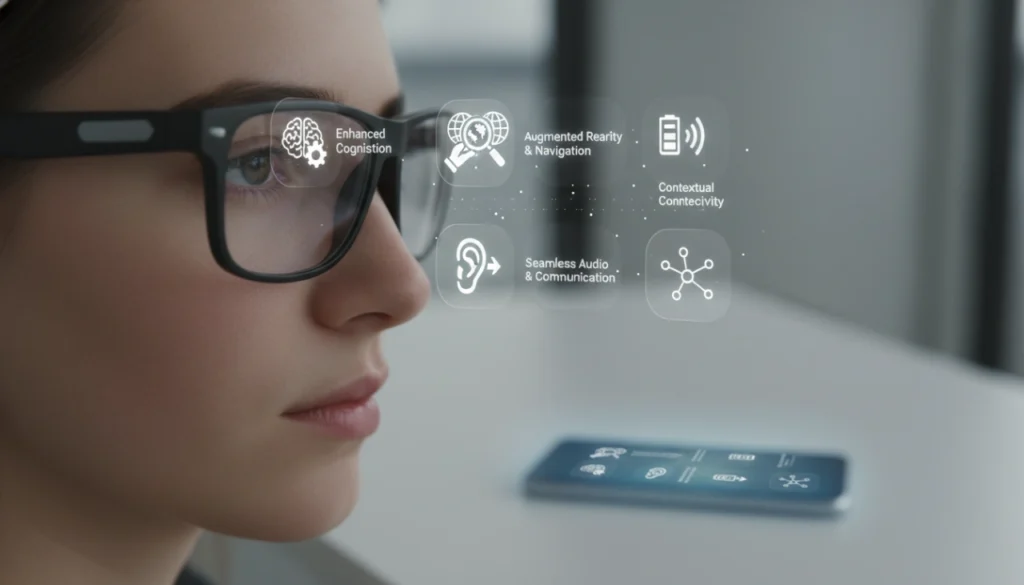
Moving your digital life to your eyes offers several distinct advantages over traditional handheld hardware. Below are the primary reasons why wearables might soon become your main computing interface.
Hands-Free Accessibility and “Heads-Up” Living
Carrying a phone often limits what you can do with your hands while trying to access information. Smart glasses solve this by placing the data directly in your line of sight. You can follow a recipe or look at directions while your hands remain free to cook or drive safely.
This change in posture also addresses the physical strain caused by looking down at mobile devices for hours every day. By keeping your head up, you maintain better spinal alignment and reduce the pressure on your neck. You stay connected to your digital life without being physically tethered to a handheld object.
The ability to receive information in a “heads-up” manner means you are less likely to miss what is happening around you. Instead of staring at a screen while walking through a crowd, you see notifications in your peripheral vision. This balance allows you to stay informed while remaining fully aware in your physical environment.
Real-Time Information Overlays (Augmented Reality)
Augmented reality allows digital information to be placed directly onto the physical objects you see. If you are looking at a historical building, a small window can appear to explain its history. This adds a layer of useful data to your surroundings without requiring you to search for it manually.
Translation becomes much easier when the text is updated right in front of your eyes. You can look at a sign in a foreign language and see the translated version perfectly placed over the original. This capability makes traveling and exploring new cities much more efficient than using a handheld app.
Even complex tasks like home repairs become simpler with digital instructions. You can look at a broken appliance and see virtual arrows pointing to the parts you need to fix. This type of visual guidance provides a level of assistance that a two-dimensional phone screen simply cannot match.
Seamless AI Integration for Contextual Help
Modern wearables are designed to understand what you see and provide help based on that visual data. Because the cameras are positioned at eye level, the AI assistant shares your exact perspective. This allows the system to answer questions about your surroundings with high accuracy.
You can ask the assistant to identify objects or summarize a page of text just by looking at it. There is no need to take a photo, open an app, and upload the image for analysis. The entire process happens in real time, making the interaction feel natural and immediate.
This type of help is much more useful than a standard chatbot because it knows your physical context. It can remind you where you left your keys or tell you if a grocery item fits your diet. The AI becomes a silent partner that supports your daily activities without requiring constant manual attention.
Ending the “Scrolling Zombie” Mental Health Loop
Checking a phone for a single notification often leads to long sessions of mindless scrolling through social media. The interface of a smartphone is built to keep your attention on the screen for as long as possible. Smart glasses provide a different experience by showing only the specific information you need.
Because the display is glanceable, you can see a message and decide if it needs a response in a few seconds. Once you have the information, the digital overlay disappears, and you are back to your physical surroundings. This prevents the habit where one notification pulls you into digital distractions for thirty minutes.
Using a wearable device helps you regain control over your digital habits by filtering out the noise. You receive the vital data that matters while ignoring the constant stream of alerts that would usually lead to distraction. This encourages a healthier relationship with technology that respects your time and attention.
Hyper-Personalized Visual and Audio Experiences
High-end glasses can act as a private cinema that only you can see. You can watch a movie on a virtual giant screen while sitting on a plane or a train without anyone else knowing. This provides a high-quality media experience that is much more immersive than a small handheld screen.
The audio systems in these devices use spatial technology to make sound feel like it is coming from the environment around you. This allows for clear calls and music while still letting you hear important sounds in your physical surroundings. The audio adapts to your ears and your location to provide the best possible quality.
These experiences are private, as the visual and audio data are directed only to you. You can have a private meeting or look at sensitive documents in a public space without worrying about others seeing your screen. This level of personalization makes the device a powerful tool for both work and entertainment.
5 Major Obstacles Stopping Us From Ditching the Screen Today
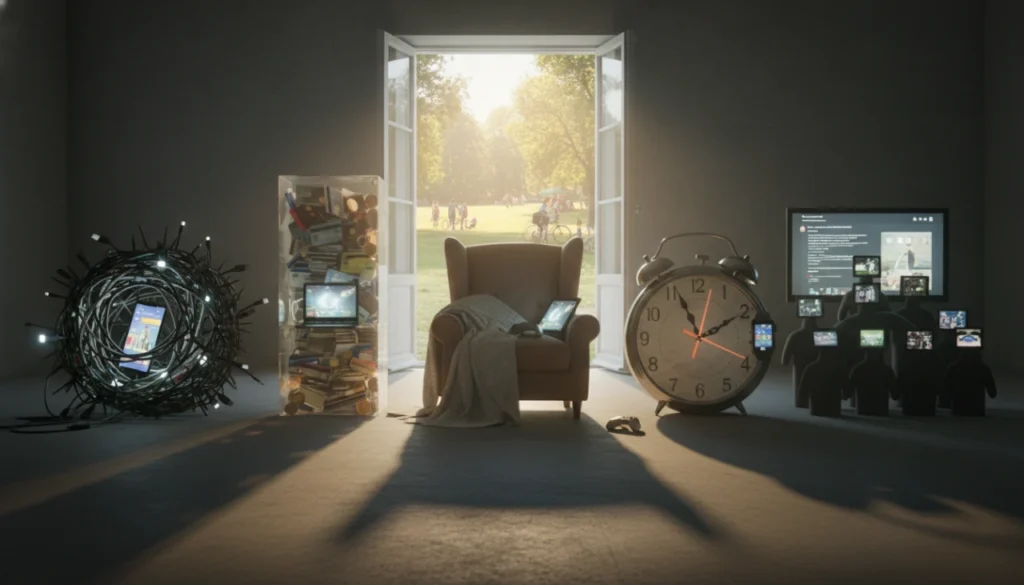
Despite the rapid progress in wearable tech, several technical and social barriers remain. Below are the primary issues that manufacturers must solve before these devices can truly replace the handheld screen.
The Hardware Bottleneck: Battery Life and Thermal Constraints
Creating a device that looks like standard eyewear but contains a powerful computer is an immense engineering task. Most consumers want a frame that weighs less than seventy-five grams, which leaves very little room for a battery. Current models often struggle to last more than a few hours of continuous use.
Heat is another major issue when placing processors so close to the user’s face. Unlike a phone, which can dissipate heat through its large back panel, glasses have almost no surface area to stay cool. If the device becomes too warm, it must slow down its performance, which ruins the user experience.
Manufacturers are searching for ways to improve battery density and cooling without adding bulk to the frames. Until these power issues are resolved, most smart glasses will remain limited to short interactions. We need a major breakthrough in hardware efficiency before these can be used for a full day of wear.
Visual Comfort and the Vergence-Accommodation Conflict (VAC)
Looking at virtual objects can sometimes cause eye strain or a feeling of nausea. This happens because your eyes are adjusting to a screen just inches away, but your brain thinks the object is several feet in front of you. This conflict between where the eye is centering and where it is looking is a difficult problem to solve.
Engineers are testing new display technologies that can adjust the optical point of digital images in real time. If the virtual object moves closer, the glasses change the display so your eyes react naturally. However, this technology is currently too complex to fit into lightweight consumer glasses.
Without a solution to this Vergence-Accommodation Conflict (VAC), users will not be able to wear augmented reality glasses for more than a few minutes at a time. Long-term comfort is essential for any device that intends to replace a smartphone. Solving this problem is the biggest requirement for high-fidelity wearable computing.
Input Limitations: Moving Beyond the Keyboard
Typing a long email or a detailed report is much faster on a physical or virtual keyboard than it is with voice or gestures. While voice commands work well for short messages, they are not practical in loud public spaces or quiet offices. There is currently no high-speed way to input text into a pair of glasses.
Hand gestures in the air can also become tiring after a short period, creating physical fatigue in the arms. Moving your hands around to click on virtual buttons is much more physical effort than tapping a screen. Until we have a more efficient way to communicate with the system, deep work will still happen on phones or laptops.
Some companies are investigating neural bands that can read small muscle movements in the wrist to control the glasses. This would allow you to type or select items with tiny movements that nobody else can see. However, this technology is still in the early stages of development and is not yet ready for the average user.
Social Stigma and Public Privacy Concerns
Privacy concerns are a major obstacle for any device that includes a camera on the face. People are often uncomfortable being recorded in public spaces without their knowledge or consent. This social friction led to the failure of early smart glasses and continues to be a point of debate today.
To address this, many manufacturers have added bright LED lights that turn on whenever the camera is active. While this helps, it does not completely remove the fear that the glasses could be used for secret recording or facial recognition. Establishments like gyms and schools may even ban the devices to protect the privacy of their patrons.
Building a set of social norms around these devices will take time. People need to feel confident that the technology is being used responsibly and that their personal data is safe. Until the public feels comfortable around these cameras, adoption will likely be limited to specific professional or private environments.
High Manufacturing Costs and Retail Price Points
The price of high-quality augmented reality remains much higher than the average smartphone. While simple smart glasses with audio and cameras are relatively affordable, true AR displays require expensive optics and sensors. This makes it difficult for the average consumer to justify the purchase.
Manufacturing these devices is also complicated, which keeps the supply low and the prices high. The components needed for waveguide displays and micro-LED screens are not yet produced at the same scale as smartphone parts. This means that early adopters will have to pay a notable premium for the best technology.
For glasses to replace phones, they must reach a price point that competes with the mid-range mobile market. If the hardware costs thousands of dollars, it will remain a niche product for tech enthusiasts and professionals. Mass adoption will only happen when the cost of a high-end wearable is similar to the cost of a standard phone.
Meta Ray-Ban AR Features: Leading the Consumer Charge
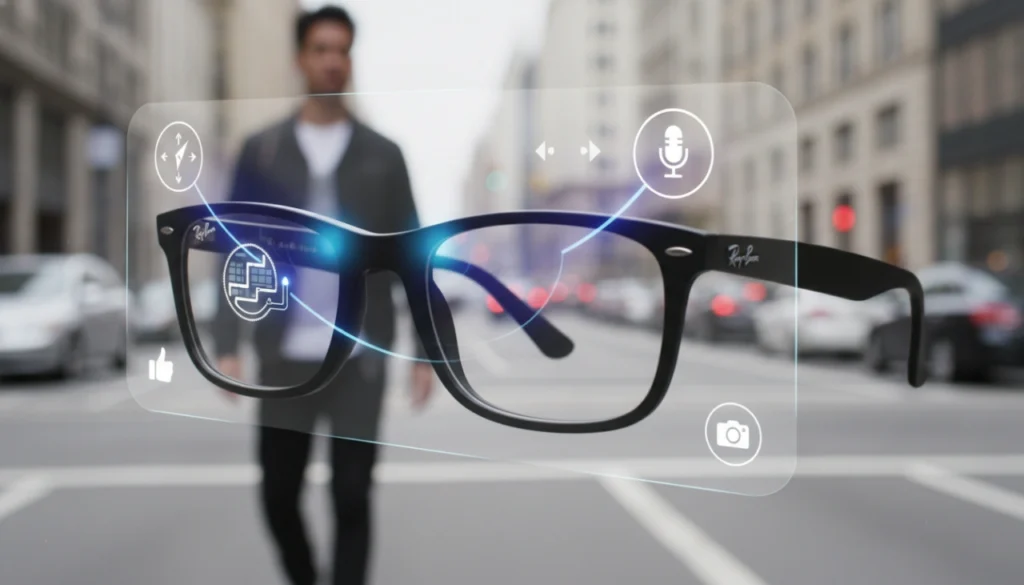
The success of recent wearable collaborations centers on the ability to interact with artificial intelligence through a camera. Users can now ask questions about the objects they see, such as identifying a plant or translating a menu, without needing to type a single word. This method of using a camera to provide context to an AI assistant makes the device feel much smarter than a traditional phone.
Meta found success by prioritizing the appearance of the frames over the density of the hardware. By making the Meta Ray-Ban glasses look like classic eyewear, they removed the social barrier that made previous attempts at smart glasses feel out of place. Most people cannot even tell the difference between these and standard sunglasses, which helps the technology disappear into daily life.
The next steps involve the Orion project, which aims to add true visual overlays to these stylish frames. While current models focus on audio and cameras, future versions will include the ability to see digital images floating in space. This progression suggests that by 2026, the hardware will move closer to being a functional replacement for a screen.
Apple Smart Glasses Release: Rumors and the “Vision” Ecosystem
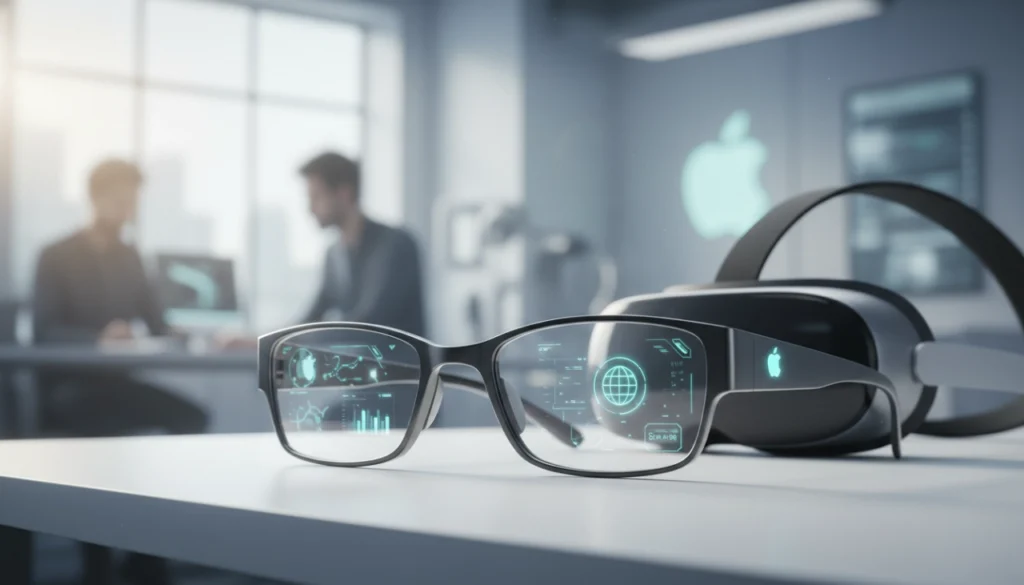
Apple is using its large spatial computer to build the foundation for its future wearable systems. The operating system developed for the headset is being refined so that it can eventually run on much smaller, lighter frames. This allows them to test how users interact with digital windows in a physical space before the hardware is ready for all-day wear.
These glasses will likely connect closely with the current phone ecosystem to handle the most demanding tasks. By using the visual intelligence features found in the latest mobile processors, the glasses can identify landmarks or read text instantly. This creates a smooth experience where the phone stays in the pocket while the glasses show the most important information.
Current industry reports suggest that a consumer version of these glasses will arrive within the next two years. The goal is to provide a device that feels like a natural extension of the Apple ecosystem, allowing users to check messages and receive directions without a handheld screen. This timeline suggests that 2026 will be a major turning point for wearable adoption.
Wearable AR Displays: Comparing the Tech Specs of 2026
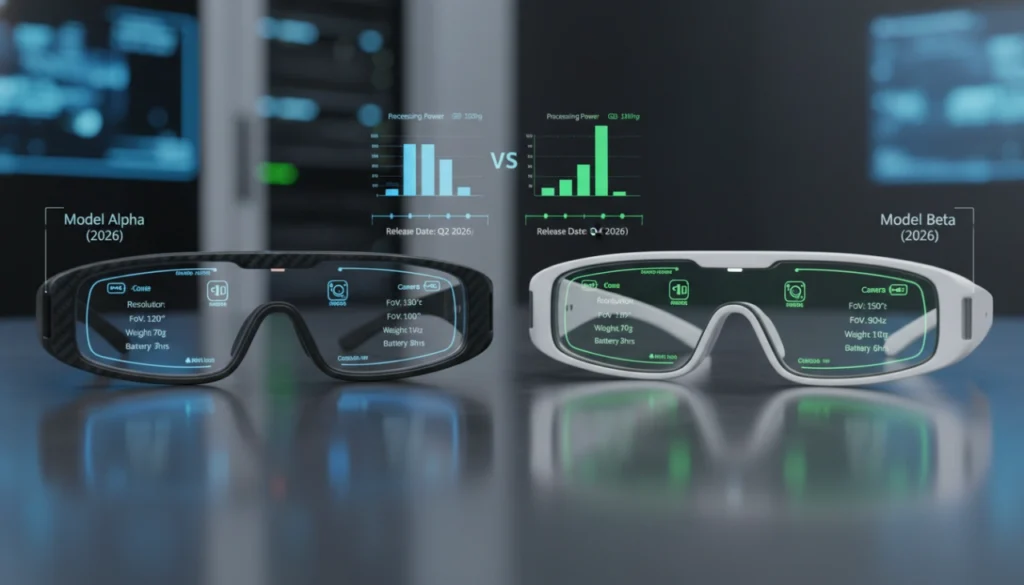
Meta and Apple are taking different paths when it comes to how users control their devices. Meta is looking into neural bands that detect muscle signals, which would allow for silent and invisible control. Apple prefers a system based on eye tracking and hand gestures, which feels intuitive but requires the cameras to see your hands.
The quality of the display is another area of competition between the two tech giants. Some systems use waveguides to bounce light into the eye, which allows the lenses to stay thin and clear. Others are experimenting with micro-LED technology to provide much brighter and more colorful images that are visible even in direct sunlight.
We will also see a choice between glasses that contain all the hardware and those that connect to a separate hub. An all-in-one device is easier to wear but often has a shorter battery life and less power. A tethered device can hide the battery and processor in a small puck or even use your phone for the heavy work.
The Health and Psychological Impact of the Wearable Transition
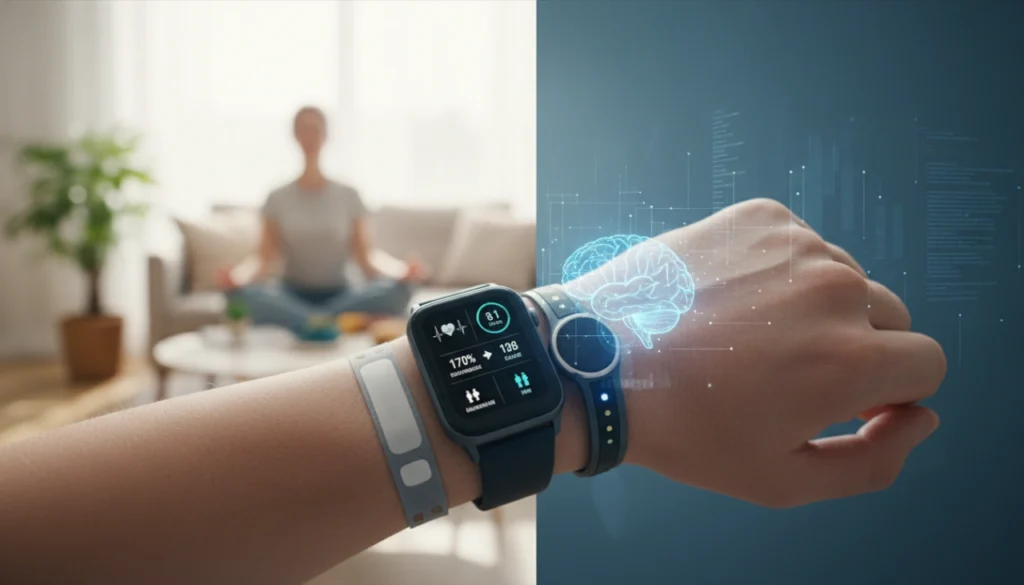
One of the most positive changes could be the improvement in our physical posture. Constant smartphone use has led to a widespread problem with neck and back pain as people spend hours looking down. Smart glasses encourage you to keep your head up and your spine neutral, which could lead to better long-term health.
There is also the potential for improved digital wellbeing by reducing the constant noise of notifications. Wearables can be set to only show the most important data, helping you stay connected without feeling overwhelmed. This glanceable nature of the technology could make us more attentive in our actual lives.
However, we must be careful about the cognitive load that comes from having a screen in our field of vision at all times. If the glasses are constantly showing data, it could become difficult to concentrate on the real surroundings. Managing this information flow will be essential to ensure the technology helps rather than hinders our mental clarity.
Privacy in the AR Era: Navigating the “Glasshole” Stigma 2.0
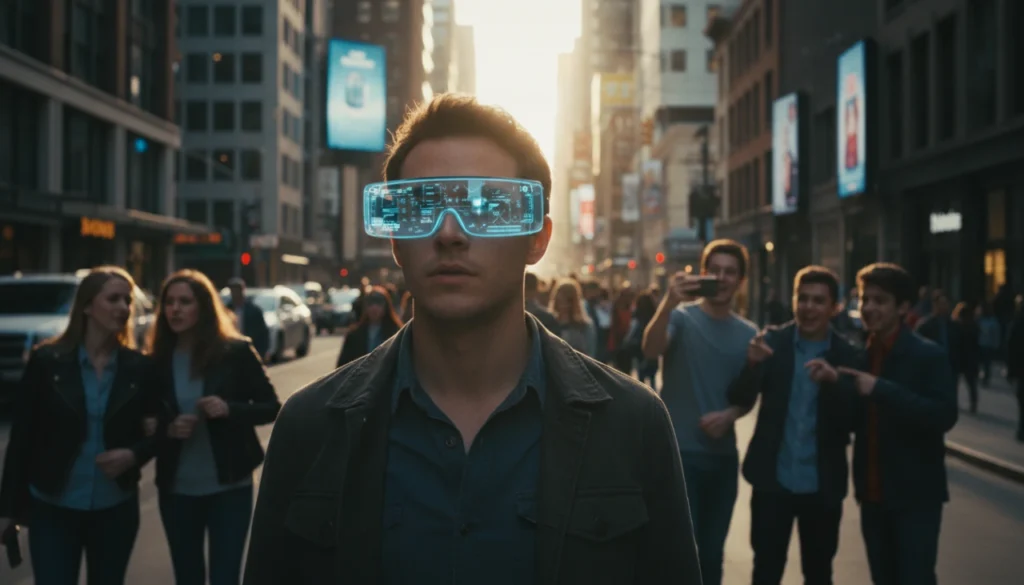
The debate over public surveillance will intensify as more people start wearing cameras on their faces. While recording lights are a start, many people worry that they can be easily covered or ignored. We will likely see a period of social tension as we decide where these devices are and are not acceptable.
Data security is also a major concern because these glasses must build a visual map of your home to function well. This map contains sensitive information about where you live and what you own. Users will need to know who owns this data and how it is being used before they are comfortable bringing these devices into private spaces.
We may see the development of new social norms and rules to handle these privacy issues. Some restaurants or theaters might ask guests to store their glasses in a locker, similar to how phones are handled in some private clubs. These rules will evolve as the technology becomes a more common part of our daily lives.
Final Verdict: Smart Glasses vs. Smartphones 2026
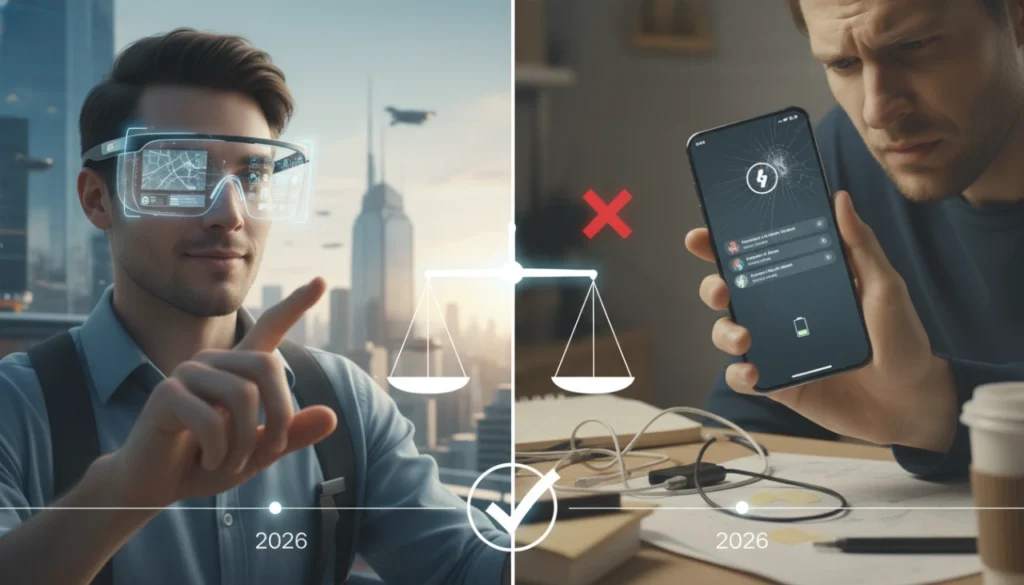
It is unlikely that 2026 will be the year the smartphone disappears entirely. Instead, the phone will begin to move into the background, acting as a power source and processing hub for your glasses. The screen in your hand will still exist, but you will reach for it much less often as your glasses handle your daily tasks.
Early adopters like remote workers, fitness fans, and commuters will likely lead the way in this transition. These groups benefit most from hands-free information and improved awareness of their surroundings. For these users, the convenience of a heads-up display will quickly outweigh the benefits of a handheld device.
The future of technology is not about getting rid of screens; it is about making them invisible until they are needed. By 2026, we will see the first real evidence that our relationship with the glass rectangle is changing. We are moving toward a time where information is simply part of the space around us.
