


In 2026, the tech industry remains a place of intense competition and massive potential. You see new companies appearing every day, each wanting to reach a billion-dollar valuation. While the rewards are high, the reality of building a lasting business is more difficult than it looks from the outside.
Many people believe that almost every new company closes its doors within twelve months. Data shows a different reality for these businesses. While the total number of failures is high over a long period, the immediate risk in the first year is usually closer to 20 or 25 percent.
You must look past the stories of instant success to see the real reasons why businesses fall apart. Understanding these patterns helps you build a company that lasts. This article examines why so many tech ventures fail and how you can be part of the small group that succeeds.
Do 90% Really Fail in the First Year?

Government data provides a clearer picture of when businesses actually stop operating. You should distinguish between a company closing in its first twelve months and the total failure rate over a decade. While many startups do not last ten years, most survive the initial launch period.
The first-year risk for tech companies is a significant challenge, but it is not 90 percent.Statistics from the Bureau of Labor Statistics indicate that about one-quarter of tech-related businesses fail within their first year. This is a high number compared to other sectors, yet it shows that survival is possible with the right plan.
The tech sector is part of the information industry, which is known for being volatile. New ideas move through this space quickly, and if a company cannot keep up, it disappears. This volatility means you must be more prepared than founders in more stable industries like agriculture.
The Survival Curve: Tracking the Startup Journey from Year 1 to 10

The path of a tech company changes significantly as it moves from the initial launch to long-term stability. Below is a look at the stages where most businesses struggle.
Year 1: The First Hurdle (~20% Failure Rate)
The first twelve months are about finding your footing and making sure your basic operations work. Many founders find that the transition from a concept to a real business is more demanding than they expected. You have to manage legal setup, initial hiring, and the first interactions with real users.
Failures in this stage usually happen because the founders cannot get the company off the ground. If you cannot solve basic operational issues or if the initial idea has no traction at all, the business ends quickly. About one in five tech companies do not survive this initial phase.
Year 2-5: The “Valley of Death” (~50% Cumulative Failure)
This period is often the most dangerous for a growing business. By this point, you have likely spent your initial capital and need to show real revenue or secure more funding. If the product does not generate enough money to cover costs, the company will run out of resources.
Many startups fail here because they cannot move from a small group of early users to a larger market. The pressure to grow can lead to bad decisions or high spending that the business cannot support. By the fifth year, half of all new ventures have closed their doors.
Year 10: The Long-Term Survivors (~70-90% Cumulative Failure)
Even businesses that survive five years can still fail before they reach a decade. At this stage, the problem is often a lack of innovation or a failure to adapt to new technology. A product that worked in 2021 might be obsolete by 2026 if the team does not keep improving it.
Long-term survival requires a constant look at the market and a willingness to change. If a company becomes too comfortable, a smaller and faster competitor will take its place. This is why the cumulative failure rate reaches 90 percent after ten years of operation.
Industry Variance
Tech startups face more risks than businesses in sectors like healthcare or utility services. In healthcare, demand is often stable and predictable, which helps companies stay in business longer. In tech, a new invention can make your entire product irrelevant overnight.
This higher risk level means you need a larger financial cushion and a more flexible strategy. You are working in a sector where change is the only constant. Understanding this difference helps you set realistic expectations for your own company.
The Funding Gap
The step from seed funding to a Series A round is a natural filter for businesses. Investors at the Series A level want to see a proven business model and clear evidence that the product can scale. If you have a flawed model, you will likely fail to secure the money needed to continue.
This gap forces companies to prove their value early or stop operating. Many founders find that while it is easy to get a small amount of money for an idea, getting a large amount for a business is much harder. This financial pressure is a leading cause of failure for mid-stage startups.
Building a “Solution in Search of a Problem”
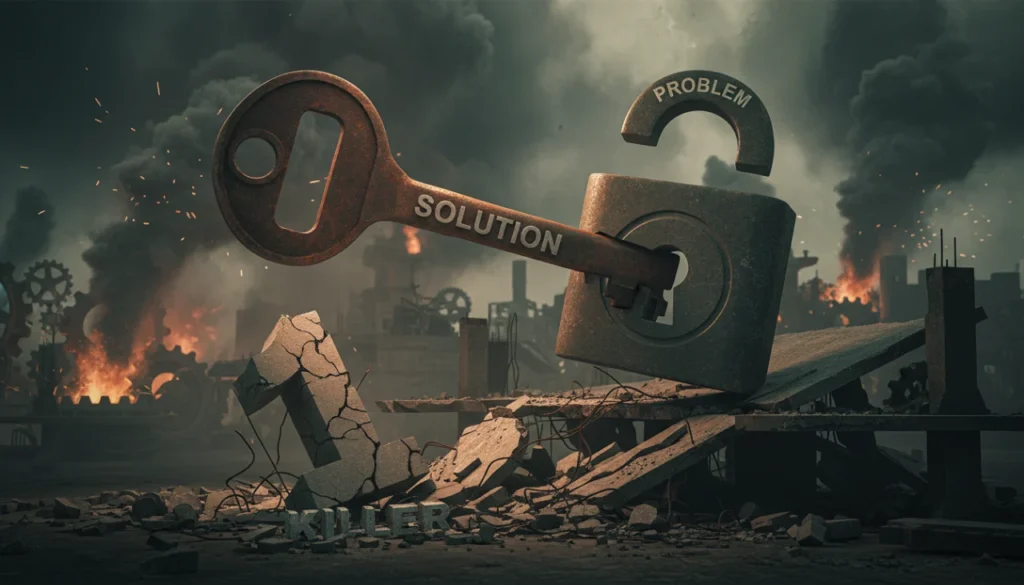
Many founders spend years building products that nobody actually wants to use. Here are the reasons why market needs are often misunderstood.
The Lack of Market Need (42%)
Building something that nobody wants is the most common reason for failure. You might have a great technical idea, but if it does not solve a specific pain point for customers, it will not sell. Many companies spend months on development only to find that the market has no interest in their product.
This problem often happens when founders fall in love with their own ideas instead of listening to the market. You must verify that a problem exists before you spend resources on a solution. Without this verification, you are guessing, and guessing is a high-risk strategy in the tech industry.
The “False Start” Phenomenon
Rushing to build a product before understanding the customer is a major mistake. You might think you know what people need, but your assumptions are often wrong. If you build a complete version of your software without feedback, you often have to rewrite large portions of it later.
This process wastes time and money that most startups do not have. Research shows that successful founders spend more time talking to potential users than they do writing code in the early stages. If you skip this step, you are likely to build something that misses the mark.
Confirmation Bias in Product Development
Founders often ignore negative feedback because they want their idea to be right. You might only listen to the people who say your product is great while ignoring the people who say they would never buy it. This ego-driven decision-making leads to a product that only a few people like.
To succeed, you must look for reasons why your idea might fail. Seeking out criticism helps you fix problems before they become terminal. If you only look for praise, you will build a business based on a false sense of security.
Ineffective Pivot Strategies
When the market tells you that your product is not working, you must be willing to change direction. Some founders wait too long to make a change, hoping that things will improve on their own. By the time they decide to pivot, they have run out of money.
A good pivot requires data and a clear understanding of what your users actually want. If you change direction without a plan, you are just starting over with less money. You must move quickly and decisively when you see that your current path is not leading to success.
Misjudging Market Timing
Being too early can be just as bad as being too late. If you launch a product before the necessary infrastructure or consumer habits exist, you will struggle to find users. Conversely, entering a market that is already full of competitors makes it hard to stand out.
You must look at the current state of technology and user behavior before you launch. Successful companies often enter the market right as a new trend is starting to gain momentum. Timing your entry correctly is a key part of surviving the first few years.
Why the Cash Runs Out Before the Vision Takes Off

Money is the lifeblood of any startup, and mismanagement of funds is a top reason for failure. Below are the common financial traps that catch tech founders.
Mismanaging the “Burn Rate”
Spending too much money on things that do not drive growth is a common mistake. You might be tempted to get a high-end office or hire a large team before you have consistent revenue. This high overhead makes the business fragile and reduces the time you have to find success.
Every dollar you spend should contribute to building the product or acquiring customers. If you spend money on status symbols or unnecessary perks, you are shortening the life of your company. Keeping your costs low gives you more chances to find a model that works.
Pricing and Cost Incompatibility
If it costs you more to acquire a customer than that customer pays you, your business will fail. Many startups offer their products for a low price to get users but never find a way to make those users profitable. This leads to a situation where the more you grow, the more money you lose.
You must understand your unit economics from the beginning. This means knowing exactly how much you spend on marketing, sales, and support for every new user. If these numbers do not add up, you must change your pricing or reduce your costs.
The Follow-on Funding Struggle
The inability to secure more money when you need it is a terminal event for most startups. You might expect that investors will always be there to give you more capital, but this is not guaranteed. If the economy changes or your metrics are not strong enough, you will find yourself without the cash to continue.
You should always be preparing for your next funding round. This means hitting the milestones that investors care about and building relationships before you actually need the money. If you wait until you are out of cash to start looking for funding, it is already too late.
Over-reliance on Venture Capital
Depending entirely on investors to keep your business running is a risky strategy. When you take venture capital, you are often pushed to grow as fast as possible, even if the business is not ready. This “growth at all costs” mentality can break a company that could have been successful with a slower method.
Founders should aim to reach profitability as soon as possible. When your business generates its own cash, you have more control over your future. Relying on your own revenue makes you less vulnerable to changes in the investor market.
Inadequate Financial Forecasting
Many tech-focused founders ignore the financial and legal side of the business. You might have a great app, but if you do not track your taxes, payroll, and accounting, you will run into serious problems. Poor planning can lead to unexpected bills that the company cannot pay.
You must have a clear view of your financial situation at all times. This means using professional accounting software and working with experts who understand the tech sector. Ignoring the “boring” parts of business is a common way to end a promising startup.
Why Internal Friction Sinks Innovative Ideas

A company is only as strong as the people who build it. Here is how team issues can lead to a total collapse.
The Skill Gap
A successful tech startup needs a mix of skills to function. If you have a team of developers with no business experience, you will struggle to sell your product. If you have business people with no technical knowledge, you will struggle to build a product that works.
The best teams usually include a “Hacker” to build the tech, a “Hipster” to manage design, and a “Hustler” to handle sales. Without this balance, your company will have a major weakness that competitors can exploit. You must identify what skills your team is missing and fill those gaps early.
Founder Conflict and Misalignment
When co-founders disagree on the direction of the company, the business slows down. Internal arguments can lead to a toxic culture and distract the team from their goals. If the conflict is not resolved, it can lead to founders leaving the company or the business shutting down.
You must have clear agreements in place before you start working together. This includes defining roles, deciding how decisions are made, and having a plan for what happens if someone leaves. Clear communication and shared values are necessary for a long-term partnership.
Hiring the “Wrong” First Ten
The first people you hire will define the culture and the pace of your company. If you hire people who do not fit the startup environment, they will struggle to keep up with the changes. One bad hire in a small team can have a massive negative impact on everyone else.
You should look for people who are flexible and willing to work on many different tasks. In the early stages, you need generalists who can help in multiple areas. Hiring experts who only want to do one specific job can lead to bottlenecks and frustration.
The Lack of Domain Expertise
Starting a business in an industry you do not understand is a common path to failure. If you are building a fintech app but have never worked in finance, you will miss important rules and customer needs. Domain expertise helps you avoid mistakes that outsiders often make.
If you do not have experience in your chosen sector, you must find advisors or partners who do. Learning an industry while trying to disrupt it is very difficult. Understanding the history and current challenges of a field gives you a significant advantage.
Burnout and Loss of Passion
Building a startup is an exhausting process that can take many years. Many founders start with a lot of energy but lose interest when they realize how hard the work actually is. When the leadership loses their drive, the rest of the team follows, and the company starts to fail.
You must find a way to manage your stress and keep your motivation high. This means taking breaks and making sure you are building something you truly care about. If you are only doing it for the money, you will likely quit before the business becomes successful.
The “Speed Trap”: The Dangers of Premature Scaling

Trying to grow a business before it is ready is one of the fastest ways to fail. Below are the risks of moving too quickly.
Hiring Before Product-Market Fit
Adding more people to a team before you have a stable product usually makes things worse. More employees mean more communication issues and a higher burn rate. If the product still needs major changes, having a large team makes it harder to pivot.
You should keep your team as small as possible until you know exactly what your users want. Once you have a product that people are buying and using consistently, you can start to grow. Scaling before this point is a waste of capital.
Aggressive Marketing on a Leaky Bucket
Spending money on ads to get users for a broken product is a major mistake. If your app does not retain users, you are just wasting money to show people a bad experience. This is often called “marketing on a leaky bucket.”
You must ensure that your product is good enough to keep people coming back before you spend money on growth. Focus on retention and engagement first. Once your existing users are happy, marketing will be much more successful.
Operational Collapse
When a company grows faster than its internal systems, things start to break. Your customer support might be unable to keep up, or your servers might crash under the load. If you cannot provide a good service to your new users, they will leave and never come back.
You must build the infrastructure to support growth before the growth happens. This means having the right tools for HR, IT, and support. A business that grows too fast without a foundation will eventually fall apart.
The Pressure of “Inconvenient” Investors
Some investors will push you to grow at a rate that is not sustainable for your business. They want to see a return on their investment as quickly as possible, even if it puts the company at risk. Following this advice can lead to bad hiring decisions and wasted money.
You must choose your investors carefully and make sure your goals are the same. If an investor only cares about short-term numbers, they might not be the right partner for a long-term business. Being able to say “no” to aggressive growth is a sign of strong leadership.
Losing the Personal Touch
Rapid growth can cause a company to lose the values that made it successful in the first place. You might stop listening to your early users or become too focused on numbers instead of people. This loss of connection can lead to a drop in quality and a decline in brand trust.
As you scale, you must work hard to maintain your culture and your customer relationships. Make sure that every new employee understands the company’s mission. Keeping the personal touch helps you stay different from larger, more robotic competitors.
Learning from the Fallen: Recent High-Profile Post-Mortems

Looking at why large companies failed provides valuable lessons for every founder. Here are some examples of businesses that fell apart.
Case Study: Quibi
Quibi spent billions of dollars on short-form video content but failed to understand how people actually watch videos. They launched with a mobile-only model right as people were staying home and watching content on their televisions. They also ignored the social side of video, making it hard for users to share clips.
The lesson here is that you cannot force a new habit on consumers just because you have a lot of money. You must meet users where they are and provide a service that fits their lives. Quibi’s failure shows that even the most famous leaders can misjudge the market.
Case Study: Jawbone
Jawbone was a leader in wearable technology but suffered from hardware problems and too many features. They tried to do too much at once, leading to delays and products that broke easily. Eventually, they were outcompeted by companies like Fitbit and Apple.
This case shows the danger of “feature creep” and the difficulty of hardware. You must concentrate on doing one thing very well before you try to expand. If you lose your focus on quality, your customers will find a better alternative.
Case Study: FTX (Governance Failure)
The collapse of FTX showed what happens when there is no transparency and no internal controls. When a company grows too fast without rules, it becomes a target for legal action and loss of trust. The leadership managed billions of dollars with almost no oversight, which led to a total disaster.
You must build a structure that ensures accountability at every level. This means having an independent board and clear financial records that are accurate. Without these systems, even a massive company can fall apart in a matter of days.
Case Study: Theranos (The Overconfidence Trap)
Theranos promised a technology that did not exist and used secrets to hide the truth. The founder was so confident in the vision that she ignored the scientific reality of the product. This led to a massive fraud that endangered the lives of patients and ended in criminal charges.
The lesson is that you cannot hide a flawed product with good marketing forever. Eventually, the reality will catch up with you. Honesty about your technology’s limits is necessary for building a real business.
Common Themes Across Failures
When you look at these cases, you see the same problems appearing over and over. A lack of market understanding, poor financial control, and leadership issues are the most common factors. These companies did not fail because of one mistake, but because of a series of bad choices.
To avoid these traps, you must be humble enough to listen to feedback and disciplined enough to manage your money. Success is not about being the smartest person in the room. It is about being the most adaptable and the most prepared.
The Survival Handbook: Strategic Tips to Beat the Odds

If you want to be part of the 10 percent that succeeds, you must use a different method than the founders who fail. Below are the steps you can take to protect your business.
Prioritize Rigorous Customer Discovery
You should talk to at least 100 potential customers before you build anything. Ask them about their problems and how they are currently trying to solve them. This helps you understand if there is a real market for your idea.
Do not ask people if they like your idea, as most people will be polite and say “yes.” Instead, ask them how much they would pay to solve their problem. If nobody is willing to pay, you do not have a business.
Achieve “Lean” Product-Market Fit
Start with a simple version of your product that only has the most important features. This is often called a Minimum Viable Product. Launch it to a small group of users and collect data on how they use it.
Use this data to make small changes and improvements. This cycle of testing and learning helps you find the right product without wasting time on features that nobody wants. Being “lean” means being efficient with your time and money.
Focus on Unit Economics Early
Make sure you understand how much money you make from every user from the very beginning. If your model requires you to lose money on every customer, you must have a clear and realistic plan for how that will change. Do not rely on “scale” to magically fix bad numbers.
Track your customer acquisition cost and your lifetime value. If these numbers are moving in the wrong direction, stop and fix them before you try to grow. A profitable small business is much better than a large business that loses money every day.
Build a Diverse and Resilient Culture
Hire people who bring different perspectives and skills to the table. A diverse team is better at solving complex problems and identifying risks that a group of similar people might miss. Look for “cultural contribution” rather than just “cultural fit.”
You should also build a culture that values honesty and feedback. Encourage your team to speak up when they see a problem. A resilient culture is one that can handle stress and change without falling apart.
Maintain Human Oversight of AI and Tech
While AI can help you run your business more efficiently, you should not let it make all the decisions. Human judgment is still necessary for strategy, ethics, and building relationships. Use technology as a tool to support your team, not to replace them.
Regularly check the work that your automated systems are doing. This ensures that you are not making large-scale mistakes because of a bug or a bad algorithm. Maintaining control over your tech is a key part of staying stable in 2026.
Risks in 2026: AI, Economy, and Regulation

The current year brings unique challenges that founders must handle to stay in business. High interest rates have changed how investors look at new companies, making it harder to get funding without a clear plan for revenue. You can no longer rely on easy capital to cover up a flawed business model.
New rules about data privacy and how AI is used are also creating risks for tech companies. If your product depends on user data, you must comply with strict legal standards that change across different regions. Failing to follow these rules can lead to large fines or the closure of your service.
Investors in 2026 are looking for a path to profitability rather than just growth. The era of spending money to gain users without a way to make money has ended. You must show that your business can sustain itself if you want to attract long-term support.
The Final Word: Turning Failure Into a Foundation for Success

Most tech startups end because of a mix of market, money, and team issues. It is rarely one single event that takes a company down. By understanding these pitfalls, you can create a roadmap of what to avoid as you build your own business.
You should view these risks not as reasons to be afraid, but as areas where you can be better than your competitors. Use the data available to make informed decisions and stay disciplined with your finances. The founders who succeed are the ones who stay flexible and concentrate on solving real problems.
Finally, remember that the goal is to build a business that provides value to users and can support itself. If you prioritize adaptability and fiscal discipline over hype, you are much more likely to be in the 10 percent that survives. Use the lessons of the past to build a stronger future for your company.
