

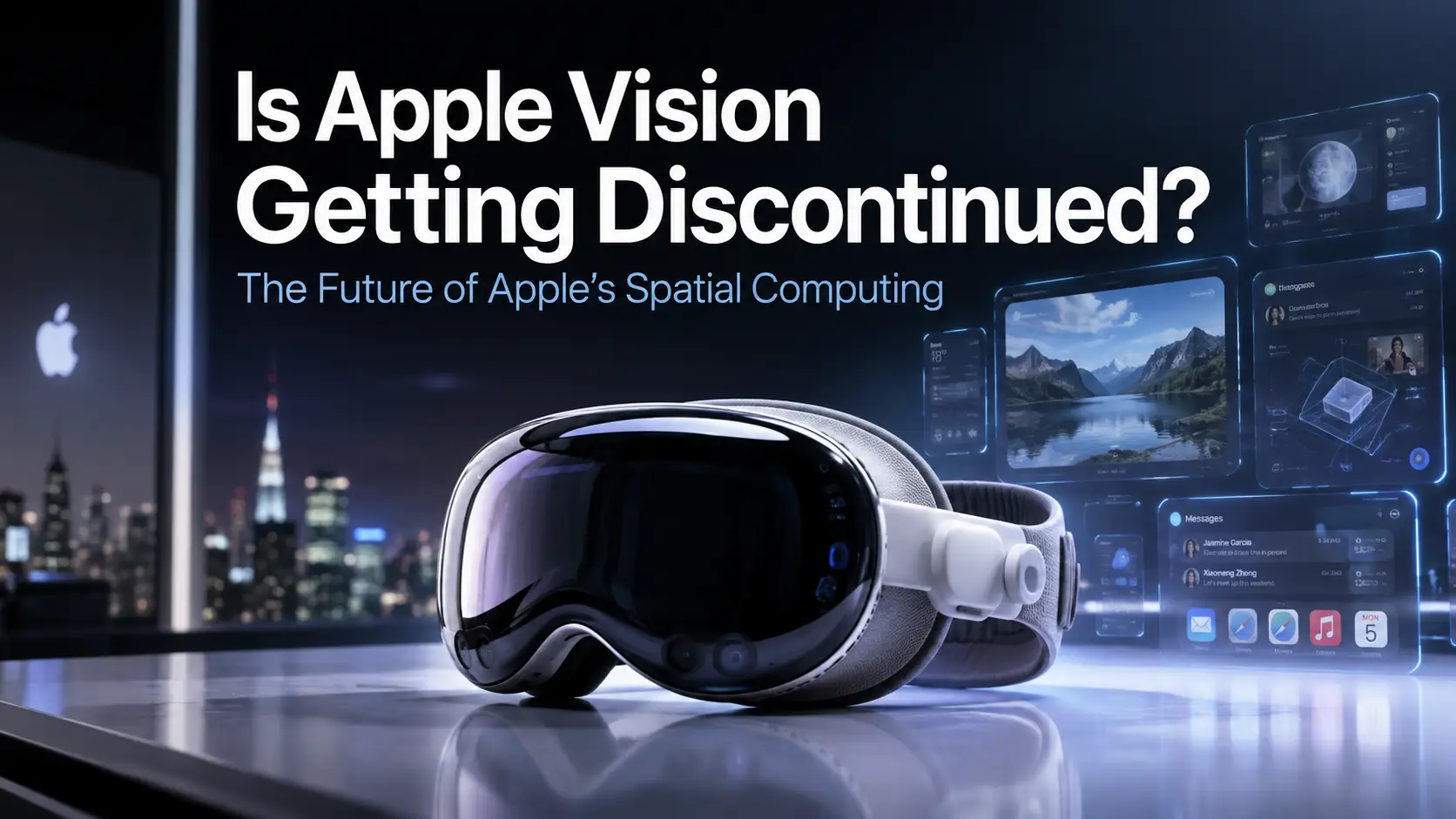
You likely remember the energy surrounding the launch of the Apple Vision Pro, where it was presented as the next major leap in personal technology. Apple promised a future where your physical surroundings and digital content would exist in a single, fluid environment, aiming to change how you work and play. The marketing emphasized a high-end experience that would make traditional screens feel limited and outdated.
The company intentionally used the term “Spatial Computing” to distinguish its product from existing virtual reality headsets. By avoiding the VR label, Apple attempted to position the device as a serious productivity tool rather than a toy for gaming. This terminology was meant to signal that the headset was a new category of computer, capable of replacing your laptop and desktop with an infinite canvas of apps.
Despite the initial excitement and long lines at retail stores, the device is now facing a harsh reality in the open market. Analysts are pointing to declining sales figures and a lack of sustained interest from the general public as evidence of a commercial struggle. What began as a bold prediction for the future of tech has quickly turned into a cautionary tale about the limits of luxury hardware.
The Financial Indicators of a Product in Decline
The financial health of any new product line is easy to track through its manufacturing and sales data. Below are the key metrics that point toward a cooling interest in Apple’s wearable tech.
Drastic Production Cuts at Luxshare
Manufacturing data often tells the real story before official press releases do. Apple’s primary partner for assembly, Luxshare, experienced a massive change in production schedules as 2025 began. The reports suggested that the assembly lines intended for the headset reached a standstill due to a massive surplus of unsold parts.
This halt was a response to a lack of movement at the retail level. When a company stops building a product so early in its life cycle, it usually means the warehouse shelves are already full. For a device that was supposed to represent the next decade of computing, this sudden pause sent a clear signal to the industry.
You can see the impact of these cuts in the local supply chains as well. Smaller vendors who provided sensors and displays found their orders reduced or canceled entirely. This ripple effect confirmed that the demand for high-end spatial hardware was far lower than the initial production capacity had anticipated.
The Plummeting Shipment Numbers
Early shipment data for 2024 showed that Apple moved roughly 390,000 units, which was a respectable start for a niche luxury item. However, the momentum failed to hold as the year progressed. By the time 2025 arrived, the numbers began to look far more grim for the future of the platform.
Predictions for late 2025 suggest that quarterly shipments could drop to as low as 45,000 units. This is a tiny fraction of the volume seen during the launch of other Apple categories. When you compare these figures to the tens of millions of units moved by the iPhone or iPad, the scale of the struggle becomes undeniable.
A drop of this size indicates that the product has failed to move beyond the early adopter phase. Once the initial group of tech enthusiasts and influencers purchased their units, there was no secondary wave of mainstream buyers to pick up the slack. Without a growing user base, the platform faces a difficult path toward becoming a sustainable business.
Rapid Withdrawal of Digital Advertising Spend
Marketing budgets are a reflection of a company’s confidence in a product’s ability to sell. Data shows that Apple pulled back its digital advertising spend in the U.S. and U.K. by over 95% after the initial launch window. This suggests that the company realized that additional spending was not resulting in more sales.
You no longer see the constant barrage of video ads showing people using the headset in their living rooms or offices. Instead, the marketing attention has moved toward other products that offer a better return on investment. This withdrawal of support is a tactic often used when a product is being moved into a maintenance phase.
The lack of public promotion makes it harder for the device to stay relevant in the minds of consumers. Without a constant reminder of why the device is useful, it quickly becomes a curiosity rather than a necessity. The silence from Apple’s marketing department is perhaps the loudest indicator of the current situation.
Market Comparison with Legacy Hardware
To understand the scale of this disappointment, you have to look at the historical trajectories of the iPhone and iPad. When those devices launched, they saw explosive growth in their first two years. They solved immediate problems for users and offered a clear value that justified their cost.
The Vision Pro has not followed that path. Instead of growing, its user base is stagnating or shrinking as early units are returned or left on shelves. The iPhone and iPad became essential parts of daily life quickly, but the headset remains an optional and often inconvenient accessory for most people.
This contrast shows that a high-quality brand name is not enough to guarantee the success of a new hardware category. If the utility of the device does not match its price and complexity, it will struggle to gain the same traction as legacy products. The hardware is impressive, but it lacks the universal appeal that made previous Apple launches so successful.
Analyst Downgrades and Market Sentiment
Firms like IDC and other market research groups have been forced to adjust their forecasts significantly. After seeing the real-world demand, these experts lowered their long-term sales expectations for the spatial computing market. Their data suggests that the appetite for expensive, bulky headsets is much smaller than originally thought.
Market sentiment has turned from curiosity to skepticism. Investors and industry observers are questioning whether the massive investment in this technology will ever pay off. These downgrades often influence how developers and partners view the platform, leading to a loss of confidence across the entire ecosystem.
When the people who study these trends for a living start to pull back their numbers, it creates a negative feedback loop. This makes it even harder for the product to find its footing. The general consensus is that the device was priced for a market that simply does not exist at a large scale yet.
The Cost of Innovation: Breaking Down the Pricing Barrier
At a starting price of $3,499, the device immediately shut out the vast majority of potential users. Even for “prosumer” buyers who are used to paying a premium for tech, this figure was a significant barrier to entry. It forced the product into a luxury niche where it had to be perfect to justify the expense, leaving no room for the growing pains common in first-generation hardware.
The actual cost of ownership often went much higher than the base price once you added the necessary extras. If you wear glasses, you had to pay for custom Zeiss inserts, and many users felt forced to upgrade the storage to handle high-resolution media. When you include tax and a carrying case, many people were looking at a total bill of nearly $4,000 for a single device.
Apple’s strategy of setting a high premium failed because the utility of the product was not yet proven. You can justify a high price for a tool that you use for eight hours a day to earn a living, such as a high-end MacBook. However, for a device that mostly offers a new way to watch movies or browse the web, the math simply did not work for most households.
Physical and Ergonomic Obstacles to Mass Adoption
The hardware inside the device is powerful, but wearing it for any length of time presents a serious challenge. Below are the physical reasons why many users found the experience to be more taxing than they expected.
The Weight Problem: 600g of Facial Pressure
The headset weighs roughly 1.4 pounds, which might not sound like much until you strap it to your face. Most of that weight is concentrated on the front of the device, pulling your head forward and straining your neck. Even with the optional dual-strap design, the pressure on your cheeks and forehead becomes hard to ignore after twenty minutes.
Competitors have managed to build lighter devices by using more plastic and moving certain parts to the back of the head. Apple’s choice of glass and aluminum makes the device look premium, but it adds a physical burden that is hard to overcome. You feel every gram of that materials choice when you try to sit through a full-length movie.
This weight issue makes the device feel like a piece of equipment rather than a comfortable wearable. If a product is physically painful to use, you will naturally reach for it less often. No amount of high-resolution video can distract you from the constant reminder that you have a heavy computer hanging off your nose.
Reports of Physical Strain and Headaches
Many early users reported that their sessions ended not because they were done with the software, but because they felt unwell. Frequent complaints included neck soreness and tension headaches caused by the way the strap pulls on the skull. This physical discomfort is a major barrier to the “work all day” promise that Apple tried to sell.
The strain is not just muscular. The way the device fits can restrict air movement around your eyes, leading to dryness or irritation. If you are someone who is sensitive to weight or pressure, the device can feel like an endurance test rather than a luxury experience.
These reports began to pile up on social media and support forums shortly after the launch. When potential buyers see that the product causes pain, they are likely to stay away. The ergonomic design failed to account for the wide variety of human head shapes and physical tolerances.
The External Battery Pack Inconvenience
One of the most criticized design choices was the move to an external battery pack that you must keep in your pocket. This “tethered” experience feels like a step backward in an age where almost all other mobile tech is self-contained. The cable can get snagged on furniture or tangled in your arms while you are moving.
The battery only lasts for about two to two and a half hours, which is barely enough for a single movie. If you want to use it for a full workday, you have to stay plugged into a wall outlet, which limits your movement entirely. This makes the “mobile” nature of the device feel restricted and clunky.
You have to manage this heavy metal brick alongside the headset itself, adding another layer of friction to the setup. This lack of a built-in power source was clearly a compromise to keep the headset’s weight down, but it created its own set of problems. It reminds you that the technology is not yet ready to be truly wireless and effortless.
Eye Strain and “Vection” Discomfort
Even with the highest resolution displays on the market, the human eye can still struggle with long-term immersion in digital spaces. Many users experience eye fatigue because their eyes are focusing on a screen just inches away while the brain thinks it is looking at distant objects. This conflict can lead to a dull ache after a short time.
There is also the issue of “vection,” which is the sensation of movement when your body is actually still. If you are moving through a digital environment while sitting on your couch, your inner ear and your eyes give your brain conflicting data. This often results in nausea or dizziness, similar to motion sickness.
These physiological challenges are hard to solve with hardware alone. They are baked into how our bodies interact with artificial environments. For many people, these feelings of discomfort make it impossible to use the headset for more than thirty minutes at a time.
Spontaneous Hardware Fatigue and Glass Cracking
Reputational damage hit the product hard when reports of the front glass cracking began to surface online. Users claimed that a hairline fracture would appear down the center of the visor without the device being dropped or hit. This spontaneous failure suggested that the internal heat or the tension of the frame was too much for the glass to handle.
For a device that costs thousands of dollars, a mystery crack is a nightmare for the owner. It raised questions about the long-term durability of the hardware and whether it could survive daily use. Apple’s initial response to these reports was slow, which added to the frustration of the early adopters.
This issue highlighted the risks of using such a complex design for a first-generation product. The external visor is a major part of the device’s identity, but it also turned out to be a point of failure. These hardware defects contributed to a growing sense that the product was not fully tested for real-society conditions.
The “Killer App” Vacuum and Software Ecosystem Struggles
A computer is only as good as the things you can do with it, and the software side of the platform has been quiet. Below are the reasons why the digital experience failed to keep people coming back.
Missing Native Support from Streaming Giants
To begin, the absence of native apps from companies like Netflix and YouTube was a massive blow at launch. While you could still use these services through a web browser, the experience was clunky and lacked the specialized features of a native app. This meant that the primary use case for many—entertainment—was compromised from day one.
These companies chose not to build apps because they did not see a large enough audience to justify the development costs. This lack of support from the biggest names in media made the App Store feel empty. It sent a message that even the industry leaders were not ready to bet on Apple’s new platform.
Without these apps, the headset felt less like a media powerhouse and more like a high-tech browser. You want your $3,500 device to have the best possible versions of your favorite services. When those services are missing, the value of the hardware drops significantly.
The Lack of a Must-Have Daily Use Case
Most successful gadgets find a way to become part of your daily routine. The iPhone handles your communication, and the Apple Watch tracks your health. The Vision Pro, however, struggled to find a single task that it performed better than the devices you already own.
You can check your email or browse the web, but those tasks are often faster and more comfortable on a laptop or a phone. There was no “killer app” that forced you to put the headset on every morning. Without that essential function, the device often ended up sitting in its case for days at a time.
This lack of purpose is the biggest challenge for any new technology. If it does not solve a problem or make a task much easier, it remains a novelty. The novelty of seeing windows floating in your room wears off quickly when you realize you still have to do the same work.
Complexity of the Gesture-Based Interface
The eye-tracking and hand-gesture system is impressive when it works, but it has a steep learning curve for many. About 20% to 30% of returns were linked to users finding the interface too confusing or difficult to set up. Small mistakes in how you look at a button or pinch your fingers can lead to frustration.
If the room is too dark or your hands are in the wrong spot, the sensors can lose track of your movements. This inconsistency makes it hard to trust the device for serious work where you need precise control. It lacks the tactile feedback and reliability of a physical mouse or a touch screen.
For many, the “magic” of the interface disappeared when they had to repeat a gesture three times just to click a link. It turns a simple task into a mental chore. This friction prevents the device from feeling like a natural extension of your body.
Developer Hesitation in a Low-Volume Market
Developers face a “chicken and egg” problem with new platforms. They don’t want to spend money building apps for a device that very few people own, but people won’t buy the device if there are no apps. With the shipment numbers falling, many developers have decided to wait and see rather than dive in.
The cost of building high-quality 3D environments is much higher than making a standard 2D app. This makes the risk even greater for small studios and independent creators. Without a flood of new content, the ecosystem stays stagnant, giving users fewer reasons to stay engaged.
This hesitation has left the App Store filled with simple experiments rather than deep, meaningful tools. You see a lot of “tech demos” but very few “pro” applications that take full advantage of the hardware. This reinforces the idea that the platform is still in its experimental phase.
The Limitations of iPad App Porting
Apple tried to fix the app shortage by allowing almost any iPad app to run on the headset. While this gave the device thousands of apps on day one, most of them were just flat windows floating in space. They did not use the spatial features of the device, making them feel out of place.
Using a touch-based app with your eyes and fingers is often a frustrating experience. Buttons that were designed for a finger are sometimes too small to select accurately with your gaze. It feels like a workaround rather than a feature that justifies the “Spatial” name.
This reliance on old apps shows that even Apple struggled to find enough unique 3D content for the launch. If you are just using the same apps you have on your iPad, you start to wonder why you paid so much for the headset. It highlights the gap between the promise of spatial computing and the reality of what is currently available.
Strategic Missteps: How Apple Missed the AI Wave
Apple invested over $20 billion into the development of this headset over many years, only to launch it just as the tech world moved its attention elsewhere. While the company was perfecting the optics and sensors, the rest of the industry was being changed by generative AI and large language models. The Vision Pro suddenly looked like a product from a previous era of technology.
The internal resources at Apple began to move toward “Apple Intelligence” and AI development shortly after the headset hit the market. You can see this in how the company’s recent events have been dominated by AI features for the iPhone and Mac, with the headset receiving very little time. This suggests that the company is playing catch-up in a field that consumers currently care about much more than spatial computing.
Some analysts now view the headset as a “legacy” project that was too far along to cancel, even though the market had moved on. It represents a bet on a hardware-first future that has been overshadowed by the rapid growth of software-based intelligence. The massive R&D spend might have yielded more value if it had been directed at the AI technologies that people are actually using today.
Competition and the Shift Toward Lightweight Wearables
The market is moving away from the “enclosed” philosophy of the Vision Pro and toward more open, lightweight designs. You can see this in the success of the Meta Ray-Ban smart glasses, which look like normal eyewear but include AI and cameras. These devices are much cheaper and easier to wear in public, which has led to higher levels of daily use.
Consumers seem to prefer having digital assistance in a familiar form factor rather than wearing a bulky set of goggles. While the headset offers more power, the smart glasses offer more utility for the average person. The ability to take a photo or talk to an AI assistant without covering your face is proving to be a much more attractive proposition.
Rumors have already surfaced that Apple may be moving its attention away from a cheaper “Vision Air” model to focus on its own version of smart glasses. This would be a major pivot that acknowledges the failure of the bulky headset form factor. It shows that the industry is learning that comfort and social acceptance are more important than raw processing power.
The Social and Behavioral Barriers of Headset Usage
There is an inherent “anti-social” feeling to wearing a computer on your face that Apple failed to fix. Even the “EyeSight” feature, which shows a digital version of your eyes to people outside the headset, often looks blurry and strange. Instead of connecting you to the room, it serves as a constant reminder that there is a wall between you and everyone else.
This creates an “Uncanny Valley” effect, especially during FaceTime calls where your digital persona represents you. These avatars often look almost human but not quite right, which can make conversations feel awkward and stiff. You lose the subtle facial cues and natural movements that make human interaction meaningful.
There is also a psychological barrier to being “disconnected” from your physical surroundings. Even with high-quality passthrough video, you are still looking at a screen rather than the real world. This can lead to a sense of isolation that makes the device feel lonely to use, preventing it from becoming a social tool.
Was the Vision Pro Actually a “Trojan Horse” for Enterprise?
One theory suggests that Apple never intended for this to be a mass-market consumer product. Instead, it may have been a way to get high-end hardware into the hands of industrial and medical labs. In these professional environments, the $3,500 price is a small cost compared to the specialized equipment they already use.
You can find successful use cases in high-level surgery, where doctors use the headset to view 3D models of a patient’s anatomy during a procedure. It is also being used in engineering and flight simulation, where the high-resolution displays provide a level of detail that other headsets cannot match. In these settings, the weight and the external battery are minor issues.
In this light, the device looks more like a $3,500 “Developer Kit” that Apple sold to the public to gather data. It allowed them to test their manufacturing and software on a small group of people while waiting for the technology to get smaller and cheaper. While it may have failed as a consumer product, it might still succeed as a tool for high-end professional work.
Higher-Than-Average Return Rates and Consumer Fatigue
Reports from retail locations suggested that the device had a much higher return rate than any other product in Apple’s history. Many people bought the headset to try the technology for 14 days and then returned it before the refund window closed. This allowed them to experience the “future” for free without making a massive financial commitment.
This “Reviewer Return” phenomenon was driven by influencers and tech enthusiasts who needed the device to create content but didn’t want to keep it. Once they filmed their videos and shared their thoughts, the headset had served its purpose. This inflated the initial sales numbers but led to a sudden drop as the returns were processed.
For those who did keep the device, the “collecting dust” syndrome became a common problem. After the initial week of showing it off to friends and family, many users found they had no reason to pick it up again. The effort required to set it up and wear it was simply too high for the limited rewards it offered in daily life.
Lessons for the Future of Apple’s Wearable Strategy
Apple will likely take what it learned from this experience and pivot toward more affordable and wearable formats. The software developed for VisionOS is valuable, and it could eventually find a home in a pair of glasses that look like normal frames. This would fix the weight and social issues while keeping the core spatial features.
You might see a “Vision Lite” model that moves the processing to your iPhone, allowing the headset to be much thinner and lighter. By using the power of the phone you already carry, Apple could lower the price and make the device more accessible. Integrating AI more deeply into the eyewear will also be a major priority for future models.
The technological wins from this project, such as the incredible Micro-OLED displays, will almost certainly appear in other products. Even if the headset itself is a failure, the R&D will benefit the entire Apple ecosystem over time. This is how the company often operates—releasing a bold, expensive product to test the waters before refining it into something for everyone.
Final Word: The Legacy of a Flawed Pioneer
While the Vision Pro has failed to become a mass-market success, it remains an impressive technological showcase. It pushed the boundaries of what is possible with displays and sensors, proving that the dream of spatial computing is technically achievable. However, it also proved that technical achievement is not enough to win over a global audience.
The future of the platform depends on Apple’s ability to find a reason for the device to exist beyond mere novelty. It needs to solve the ergonomic challenges and lower the price to a point where a normal person can justify the purchase. Until that “iPhone moment” happens, the headset will remain a niche tool for a very small group of users.
Ultimately, the Vision Pro may be remembered as a necessary first step on a very long path. It provided the lessons that will lead to the next generation of wearables, even if it could not survive the reality of today’s market. Spatial computing is not dead, but it is waiting for the hardware to catch up with the vision.
