

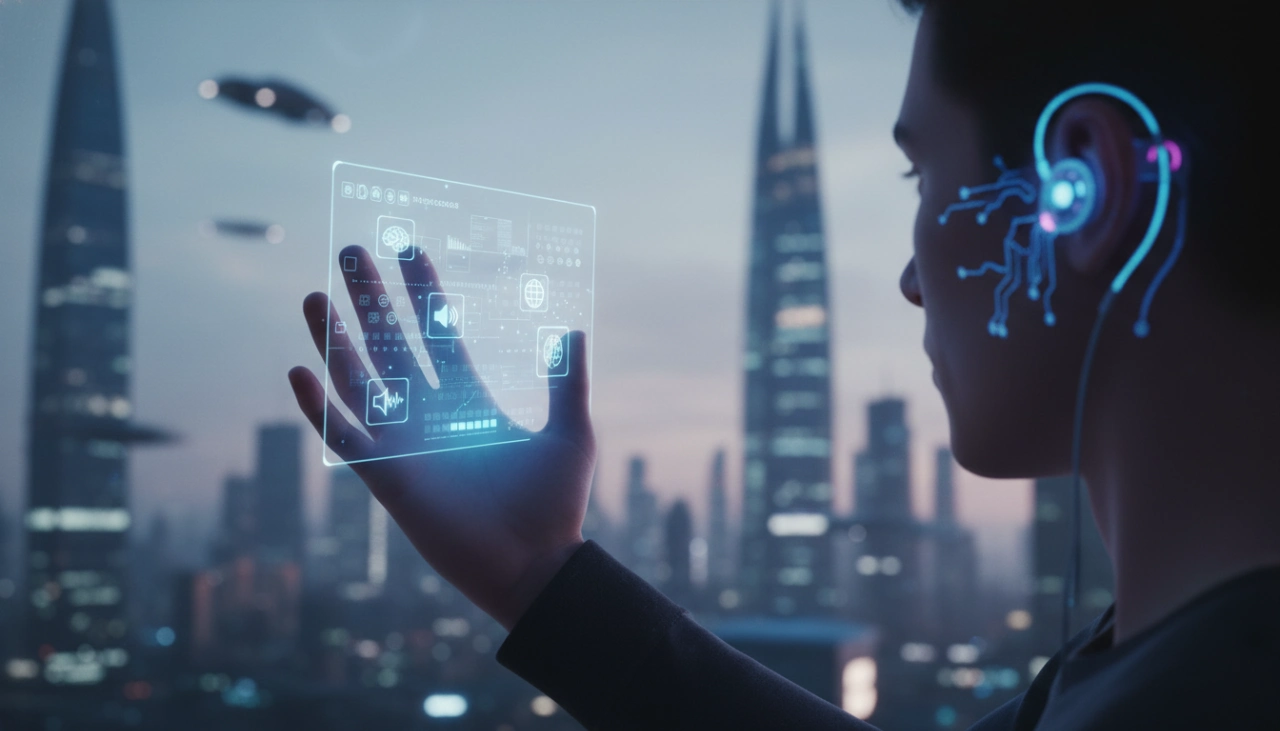
Think back to the excitement of CES 2026. While many expected bigger screens and faster processors, the real stars were the tools you couldn’t see. We are witnessing the emergence of “invisible” interfaces that move technology away from our hands and into our daily presence. Instead of looking down at a glass slab, users are beginning to look up and interact with the digital space through their bodies.
This transition involves technology migrating from our pockets to our ears and wrists. Hearables and wearables are no longer just accessories for your phone; they are becoming the primary way you engage with data. We are moving toward a time where your physical intent matters more than your ability to tap an icon.
This leads to a significant question. Is the smartphone screen becoming an optional accessory rather than a daily necessity? As neural and gesture-driven tools become more reliable, the need to carry a glowing rectangle everywhere you go is starting to fade. We are entering a period where the interface is you.
Understanding Neural Interface Earbuds: How They Work
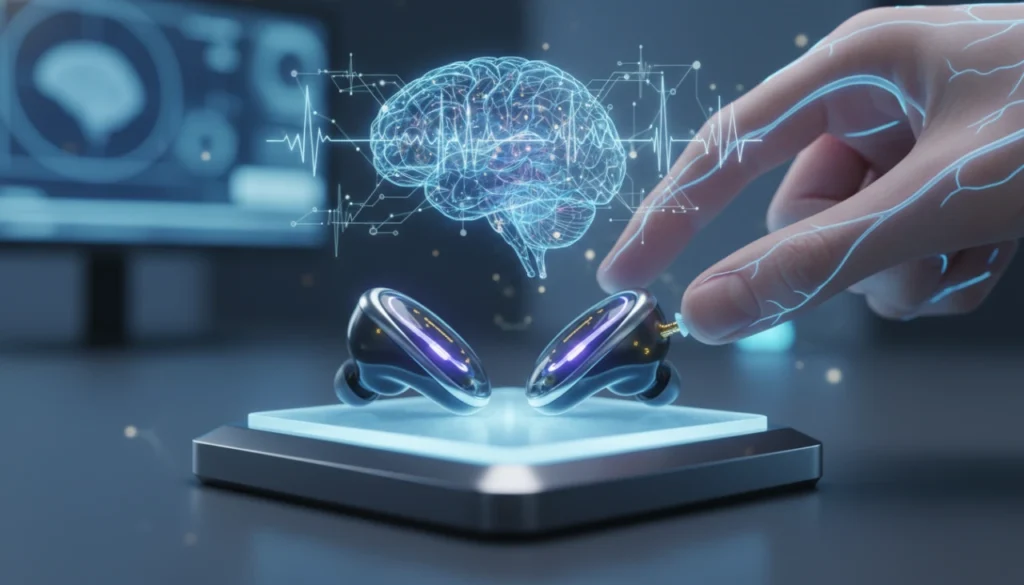
Most people think of earbuds as simple speakers for music or calls. Below is a breakdown of how these devices translate your physical presence into digital commands.
Biosensors and EEG/EMG Integration
The foundation of this tech lies in tiny sensors embedded in the ear tip. These sensors monitor the electrical activity produced by your brain, known as EEG. They also track muscle movements via EMG. By sitting inside the ear canal, these sensors stay close to the source of these signals.
This proximity allows the hardware to pick up data that skin-worn trackers might miss. The ear canal is an ideal spot because it provides a stable environment for sensitive electrodes. These components filter out background noise to find clear electrical signatures. You get a constant stream of biological data without needing a heavy headset.
Engineering these sensors requires high precision to ensure they remain comfortable for long periods. They must maintain a steady connection with the skin to function properly. If the fit is too loose, the signal drops. If it is too tight, you cannot wear them all day.
Modern manufacturing makes these biosensors almost invisible to the wearer. They are built into the same silicone or foam tips you already use. This integration means the tech feels familiar even though it is doing something entirely new. You interact with your devices by simply existing.
Capturing Micro-Gestures
Beyond brain waves, neural earbuds are experts at detecting tiny muscle movements in the face. When you clench your jaw or tap your teeth, you create specific electrical patterns. The sensors in the ear pick up these vibrations and signals instantly.
Even a slight lift of an eyebrow or a twitch of the ear can be mapped to a specific command. These movements are so small that people standing next to you might not even notice them. This creates a private way to control your tech in public spaces.
The software inside the earbuds must be trained to distinguish between intentional gestures and natural movements like chewing or blinking. This requires sophisticated filtering to prevent accidental commands. As the hardware improves, the sensitivity reaches a point where the lightest touch of the teeth can skip a song or answer a call.
This method of interaction feels like a “silent language” between you and your hardware. You do not need to reach for a button or speak to an assistant. You simply perform a micro-gesture, and the action happens. It turns your face into a sophisticated control panel.
Non-Invasive Brain-Computer Interfaces (BCI)
We often think of brain-computer interfaces as surgical implants used in medical labs. However, neural earbuds bring this concept to the consumer market in a non-invasive way. You get the benefits of BCI without needing any medical procedures or permanent hardware.
These hearables act as a bridge between your thoughts and your digital environment. They observe the state of your brain and translate those states into inputs. For example, they can detect when you are focusing intensely or when you are relaxed.
This type of wearable BCI focuses on accessibility and ease of use. Instead of complicated setups with wires and gel, you just put in your earbuds. The technology has matured to the point where consumer-grade sensors provide enough data for reliable control.
By moving BCI into the earbud form factor, the tech becomes socially acceptable. It looks like the gear everyone else is wearing. This helps normalize the idea of using neural signals to manage our digital lives.
Translating Neural Intent into Digital Action
The magic happens when AI algorithms interpret your physical intent. When you decide to move a cursor or toggle a smart light, your brain sends a specific signal. The earbuds capture this data and the AI compares it to a library of known commands.
The system learns your specific neural patterns over time. Just as a voice assistant gets better at understanding your accent, these earbuds get better at reading your intent. This creates a personalized experience where the device anticipates what you want to do.
Once the intent is identified, the system sends a command to the connected software. This happens in milliseconds, making the interaction feel instantaneous. You feel as though you are controlling the digital space with your mind.
This process removes the friction of traditional menus. Instead of clicking through three layers of an app, you simply “intend” for the action to happen. It represents a move toward a more intuitive way of living with technology.
The Role of Bluetooth and Edge Computing
To keep the earbuds small, much of the heavy lifting happens through connected devices. They use Bluetooth to relay raw sensor data to a secondary hub like a laptop or a smart home base. This keeps the earbud cool and helps the battery last longer.
Edge computing plays a vital role here by processing the data locally. Instead of sending your brain signals to a cloud server, the interpretation happens on the device or a nearby hub. This ensures your data remains private and the response time stays fast.
The connection must be incredibly stable to prevent lag. If there is a delay between your gesture and the action, the experience feels broken. Modern wireless standards are now fast enough to handle this constant stream of high-fidelity data.
As these systems become more efficient, more of the processing will happen inside the earbud itself. This will eventually allow the earbuds to function independently of a smartphone. They will become the computer rather than just a peripheral.
Naqi Neural Earbuds Review: A CES 2026 Standout
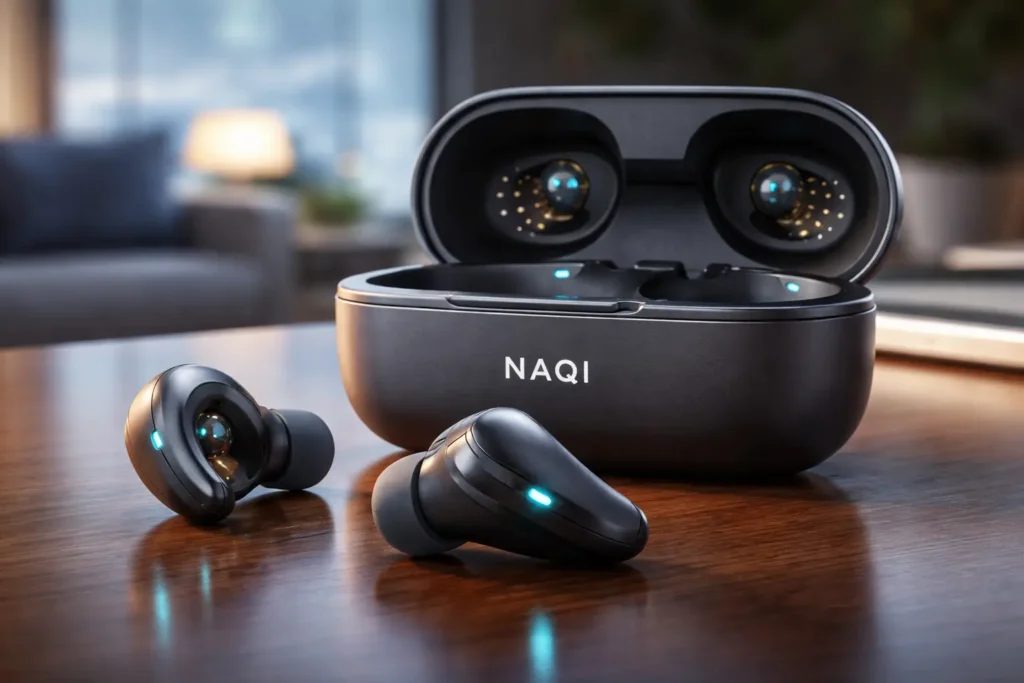
The industry is currently looking at specific products that prove these concepts work in the real environment. Below is a look at a leader in this space.
- Product Spotlight: The Naqi Logix earbuds have emerged as the benchmark for this category of hardware. They do not rely on cameras or voice; instead, they use a sophisticated sensor array to read the electrical signals around your ear. This design makes them look like standard premium earbuds, allowing them to blend into your daily attire.
- Capabilities: Users can manage their entire smart home or even operate a motorized wheelchair using only micro-gestures. By clenching a jaw or tilting the head, a person can navigate complex digital interfaces without ever touching a screen. This functionality provides a level of independence that was previously impossible for many people.
- User Experience: The most impressive part of using the Naqi system is how “invisible” it feels once you master the gestures. There is no physical barrier between your intent and the result. This creates a sense of autonomy where technology serves you without demanding your constant visual attention.
The Evolution of Gesture-Based Interaction
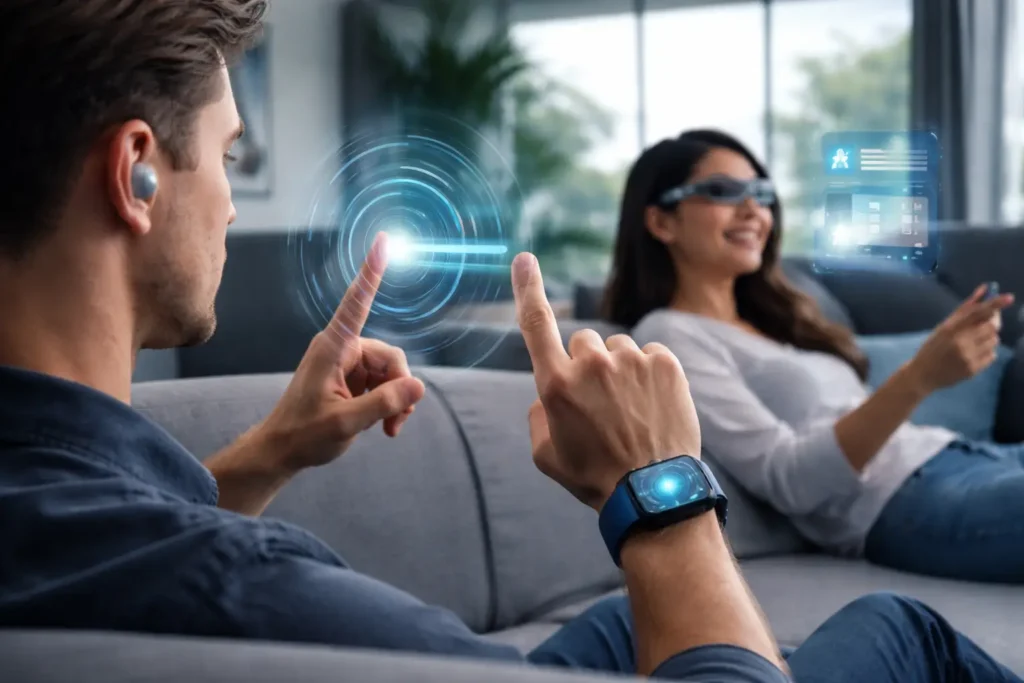
Tapping on glass is a limited way to communicate with a computer. Below are the ways gesture technology is expanding our options for interaction.
Head Gestures in Modern Hearables
Modern devices like the AirPods 4 have started to normalize using your head as an input device. You can nod to accept a phone call or shake your head to dismiss a notification. This uses onboard accelerometers and gyroscopes to track movement with high accuracy.
This type of interaction is useful when your hands are full or you are in a quiet place. It feels natural because these are the same gestures we use in human conversation. You do not have to learn a new language to use the hardware.
The software is now smart enough to tell the difference between a deliberate nod and a casual movement while walking. It looks for specific patterns of speed and direction to confirm your intent. This reduces the frustration of accidental inputs during your daily routine.
As this becomes standard, we will likely see more complex head movements used for navigation. Tilting your head could scroll through a list, while a quick turn could switch between apps. It turns your natural posture into a tool for control.
Neural Wristbands and Muscle Sensing
The Mudra Band is a primary example of how we can use the wrist to detect nerve signals. As your brain sends signals to your fingers, sensors in the wristband intercept those electrical pulses. It can detect the intent to move even if your finger doesn’t actually twitch.
This allows for “sub-visual” control of your devices. You can keep your hand in your pocket and still scroll through a map or send a quick reply. It is a discreet way to manage your digital life without being rude in social settings.
The technology maps specific nerve patterns to digital actions. Pinching your thumb and index finger might act as a “select” button. Flicking your wrist could go back to the previous screen. It creates a virtual mouse that is always with you.
This approach is often more precise than air-based gestures. Because it reads the signals directly from the nerves, it is less affected by lighting or the position of your hand. It provides a reliable way to interact with AR glasses or hidden screens.
mmWave Radar and Touchless Hand Sensing
Future wearables and home hubs are incorporating mmWave radar to track hand movements in the air. Unlike cameras, radar can see in the dark and even through thin fabrics. It detects the distance and speed of your hands to understand your gestures.
You can adjust the volume of your music by “turning” an invisible knob in the air. You can dismiss a timer with a wave of your hand from across the room. This creates a bubble of interaction around you that doesn’t require physical contact.
Radar is highly sensitive to small movements, which allows for very detailed control. It can track the individual movement of your fingers with millimeter precision. This makes it possible to type on a virtual keyboard projected onto any surface.
Because radar does not capture images, it is much better for privacy than camera-based systems. It only sees movement and distance, not your face or your room. This makes it a preferred choice for bedrooms and private offices.
Acoustic Surface Sensing
Some researchers are exploring tech that turns your own skin or a nearby table into a temporary touchpad. By using acoustic sensors, the device listens to the unique sound and vibration of your finger touching a surface. It can then determine exactly where you pressed.
This means you could use your forearm to “swipe” through messages while jogging. You could tap on a wooden desk to control your computer without a mouse. The physical environment becomes your interface.
The system uses the way sound waves travel through different materials to map the interaction area. It requires very little power and can be built into small wearables. It solves the problem of trying to use a tiny screen on a watch or earbud.
This technology makes computing feel more grounded in the physical world. You are no longer limited to the size of the device you are carrying. Any flat surface can become a tool for input whenever you need it.
Haptic Feedback Integration
Gesture tech becomes much more effective when it provides “feel” without a physical screen. Haptic motors in your earbuds or wristbands can create sensations that mimic the click of a button. This confirms that your gesture was recognized.
If you are “turning” a virtual dial, the haptics can provide a clicking sensation for every degree you move. This physical feedback helps you stay accurate without needing to look at a display. It closes the loop between your action and the result.
Modern haptics can create a wide range of textures and pulses. A soft vibration might mean you have a new message, while a sharp tap might mean an error occurred. These sensations can be very localized, such as a “tap” on a specific part of your wrist.
As gesture tech matures, haptic feedback will be the key to making it feel real. Without it, interacting with the air can feel empty and uncertain. With it, the digital environment gains a sense of weight and physical presence.
Beyond the Glass: The Rise of Screenless Technology Trends
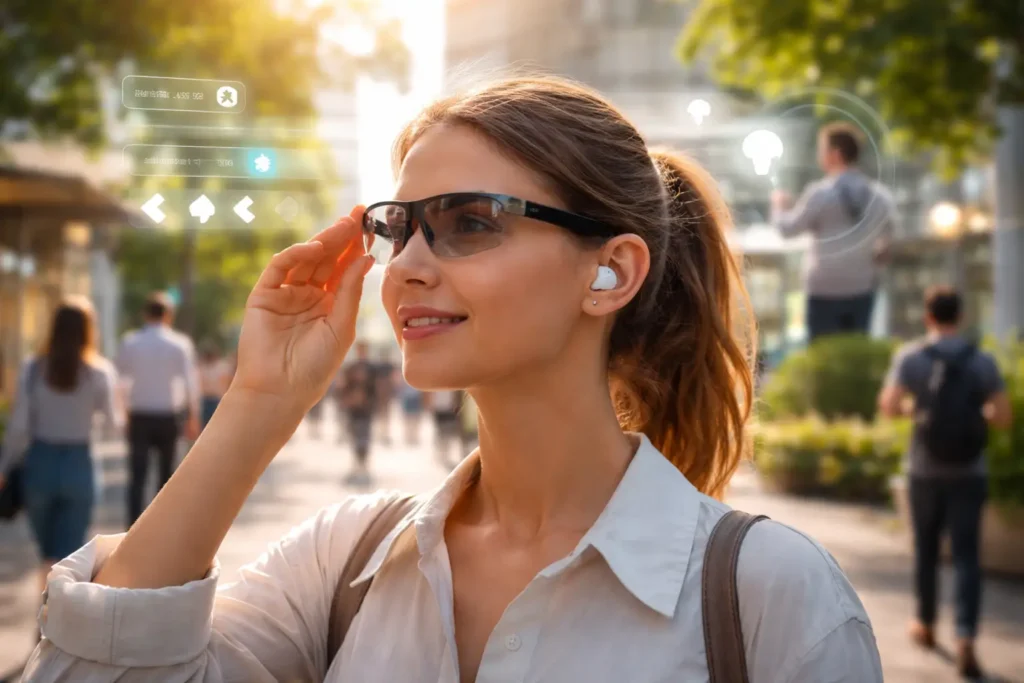
The way we think about our devices is moving toward immersive experiences rather than physical objects. Below are the trends defining this change.
- Transition to Experiences: We are moving away from focusing on the hardware in our pockets. Instead, we are looking for ways technology can support us in the background. The goal is to get the information we need without the distraction of a glowing screen.
- Calm Tech: This concept involves technology that stays out of sight until it is actually required. Instead of constant notifications, your devices wait for your signal or a specific context. It respects your attention and reduces the feeling of being constantly “connected.”
- IoT Integration: Voice and neural inputs are becoming the primary ways we talk to the Internet of Things. You don’t need an app to dim your lights or start your coffee machine. A simple thought or a quick gesture is enough to manage your entire environment.
Smart Glasses and Earbuds: The Duo That Replaces the Screen
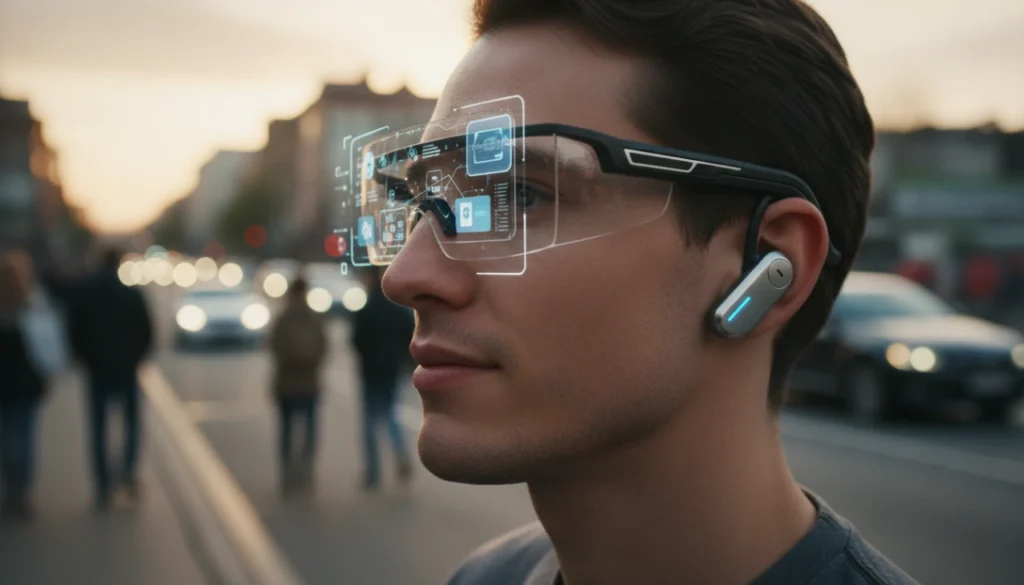
The combination of visual and audio wearables is what will finally make the smartphone redundant. Below is how these two technologies work together.
- Even Realities G2 Spotlight: Smart glasses like the Even Realities G2 provide the visual layer of this new system. While the earbuds handle your input, the glasses show you the output. This allows you to see your messages, maps, and alerts directly in your line of sight.
- The Virtual Overlay: Information is moving from a pocketed screen to a heads-up display. Instead of looking down at a map, you see arrows projected onto the sidewalk in front of you. This keeps your head up and your eyes on the environment around you.
- Synergy: The real power comes when neural earbuds and AR glasses work in tandem. The glasses show you a menu, and the earbuds let you select an option with a quick jaw clench. This pair of devices covers everything a phone does, but in a way that feels natural to the human body.
5 Key Benefits of Moving Toward Smartphone Alternatives
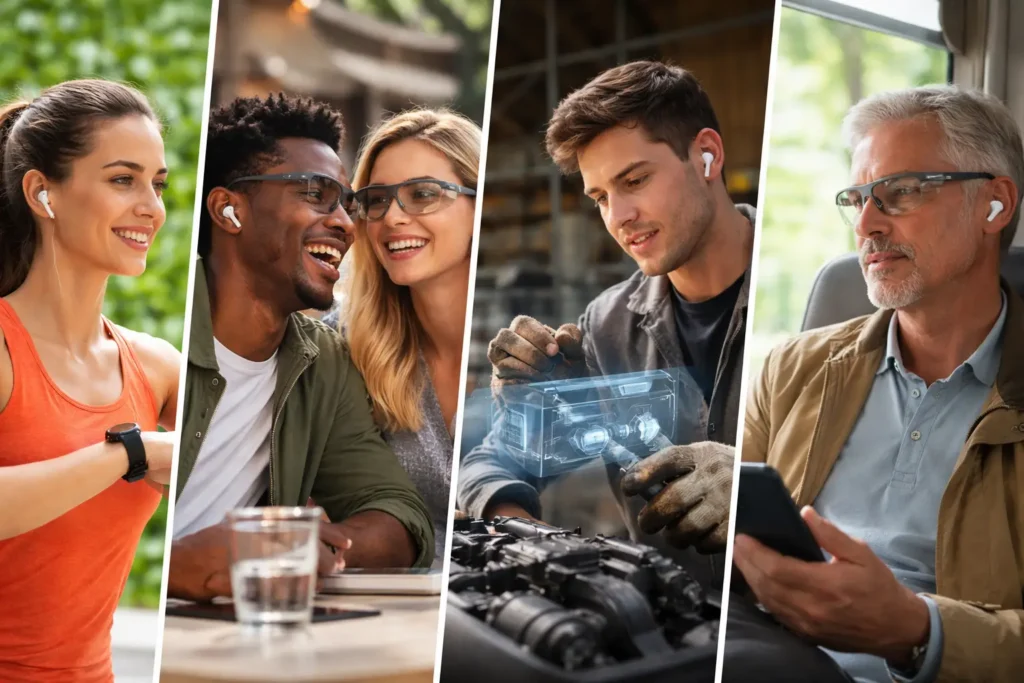
Removing the screen from the center of our lives offers several advantages. Here are the main reasons to consider these alternatives.
Drastic Reduction in Cognitive Load
Navigating through layers of app menus takes a surprising amount of mental energy. You have to unlock the phone, find the app, and then tap through the interface. Neural gestures simplify this by making the action direct.
When you can skip a track or answer a text with a simple nod, it feels more like a reflex than a task. You don’t have to stop what you are doing to manage your tech. This keeps your brain focused on the real-life activity at hand.
Intuitive gestures leverage our natural physical intelligence. We already know how to point, nod, and move our faces. By using these as commands, we remove the need to learn complex digital structures. It makes using technology feel less like work.
Over time, this leads to a more relaxed relationship with our devices. We are no longer hunting for icons or staring at loading bars. The technology responds to us, rather than us responding to the technology.
Enhanced Human Connection
The “heads-down” culture of the smartphone era has made it harder to stay present with the people around us. We often look at our screens during dinner, meetings, or walks. Screenless tech allows us to stay engaged with the physical environment.
When your notifications are delivered through audio or a discreet glasses overlay, you don’t have to break eye contact with others. You can receive information and stay in the conversation at the same time. It removes the barrier that a physical phone creates between people.
This change helps restore the social etiquette that was lost to the mobile phone. You can be informed without being rude. Your focus remains on the person you are with, while your tech supports you in the background.
Being present in the environment also makes life safer and more enjoyable. You notice the details of your surroundings that you would normally miss while staring at a screen. It reconnects us with the physical space we inhabit.
Revolutionary Accessibility
For individuals with limited mobility, these tools are not just a convenience; they are life-changing. Someone who cannot use their hands can regain full control over their digital environment. Neural earbuds allow them to type, browse, and communicate with ease.
This technology levels the playing field for people with disabilities. It moves away from “one-size-fits-all” interfaces that require fine motor skills. Instead, it adapts to the physical abilities the user already has.
The independence gained from these tools cannot be overstated. Being able to control a wheelchair or a computer without help provides a sense of dignity and freedom. It opens up new opportunities for work, education, and social life.
As these devices become cheaper and more common, they will become standard equipment for accessibility. They represent a significant step forward in how we design technology for everyone. The interface is no longer a barrier to entry.
Utility in “Dirty Hand” Environments
There are many professional settings where touching a screen is impossible or unsafe. Surgeons in the operating room, mechanics covered in oil, or chefs with flour on their hands all need to access data. Gesture and neural tech solve this problem.
A surgeon can scroll through a patient’s scans without breaking the sterile field. A mechanic can check a manual without putting down their tools. A chef can set a timer without cleaning their hands first. It improves efficiency and safety in these specialized environments.
This tech also works well in outdoor settings where gloves or rain make touchscreens unreliable. You can manage your maps while skiing or answer a call while gardening. It makes your technology useful in situations where a phone would stay in your pocket.
By removing the need for physical contact, we expand where and how we can use our digital tools. We are no longer limited by the environment or the state of our hands. The technology is always accessible.
Discreet and Private Interaction
Using micro-gestures is much more private than using a voice assistant or a large screen. You can send a message or change a setting without anyone else knowing. There is no screen for people to peek at over your shoulder.
This is particularly useful in crowded spaces like trains or buses. You can manage your digital life without drawing attention to yourself. It keeps your interactions between you and your device.
Privacy also extends to the data itself. Because these gestures are so subtle, they are hard for others to copy or observe. It adds a layer of “physical encryption” to your daily tech usage.
Discretion allows you to use technology in places where it might otherwise be distracting. You can check a quick notification in a quiet library or a dark theater without bothering others. It makes your digital presence much less intrusive.
Is the Smartphone Becoming a Secondary Device?

The role of the phone is changing from being the center of the universe to a supporting player. Below is how that transition looks.
- The Pocketed Processor: In the future, your phone might stay in your bag purely for its processing power. It will act as a “brain” that sends data to your glasses and earbuds, but you will never actually take it out. The physical screen becomes a backup rather than the main interface.
- Precision vs. Convenience: We will still need screens for tasks that require high precision, like editing a video or writing a long report. However, for 90% of our daily communication and information gathering, the screen is no longer the best tool. We will use the right tool for the right context.
- The Tipping Point: We can expect mainstream adoption to happen when the price of these wearables drops to match the cost of a mid-range phone. Once the convenience and the social acceptance are high enough, people will naturally choose the “unbound” experience over the glass slab.
The Challenges Facing the Future of Neural Tech
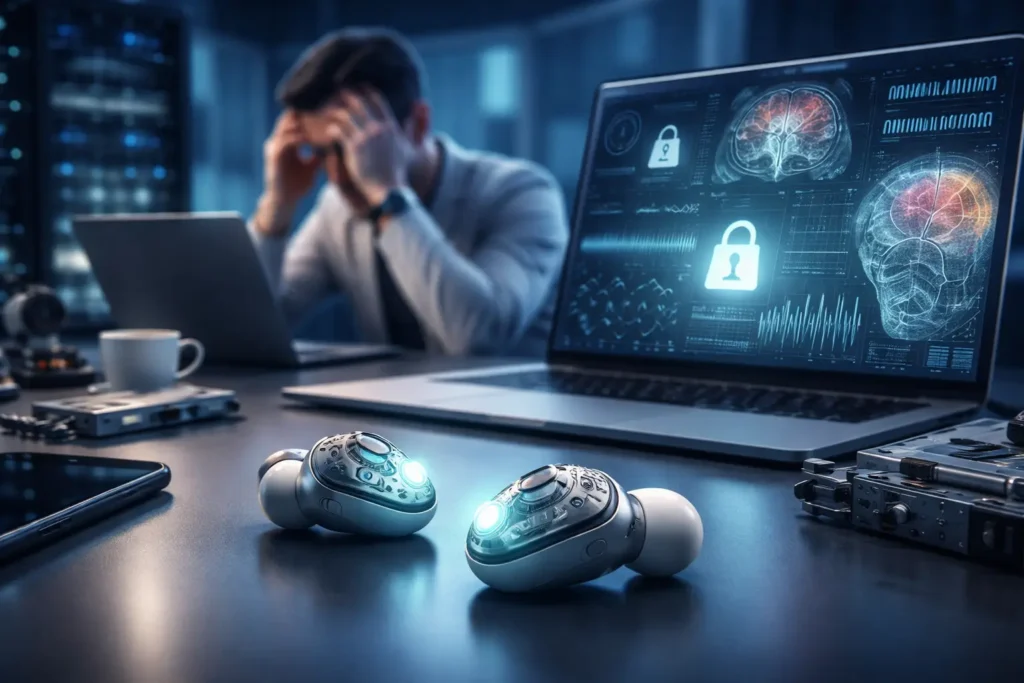
Every major advancement comes with its own set of difficulties. Here are the primary obstacles we must address.
Data Privacy and Neural Ethics
The most sensitive data a human can produce is their brain activity. There are significant concerns about who owns this data and how it is protected. If a company can read your neural signals, they could potentially understand your emotions or health status.
We need strict regulations to ensure that neural data stays on the device. It should never be sold or used for targeted advertising. Protecting our mental privacy is the next great challenge for the tech industry.
There is also the question of “neural hacking.” If a device is compromised, could someone interfere with your commands? Building secure, encrypted pathways for brain data is essential for long-term trust.
Ethical guidelines must be established before this tech becomes common. We need to define what is acceptable for a machine to “know” about a human brain. Without these safeguards, the technology could be used in ways that harm our autonomy.
High Cost Barriers
Early versions of sophisticated neural earbuds often cost $1,000 or more. This makes them a luxury item that is out of reach for most people. Until the price comes down, the benefits will be limited to a small group of users.
Manufacturing high-quality biosensors is expensive and requires specialized materials. Scaling this production to millions of units is a major industrial challenge. It will take time for the supply chain to catch up with the demand.
The R&D costs for AI algorithms that can read brain waves are also very high. Companies have to invest years of research before they can even launch a product. This cost is naturally passed on to the first generation of buyers.
As the technology matures, we will see more affordable versions enter the market. Just as smartphones eventually became accessible to everyone, neural tech will follow a similar path. But for now, cost remains a significant barrier to entry.
The Learning Curve of Invisible UI
Mastering micro-gestures is not as easy as it looks. It takes practice to move your jaw or lift your eyebrow in a way that the device recognizes consistently. Some users may find the initial setup frustrating.
There is also the problem of “accidental” commands. If you are talking or eating, the device might misinterpret a movement as a request. Refining the software to ignore natural behavior while catching intentional gestures is a constant struggle.
Without a visual screen to guide you, it can be hard to remember which gesture does what. We are moving from a “see and tap” model to a “remember and perform” model. This requires a different kind of mental effort.
Training programs and haptic feedback can help shorten this learning curve. However, it will always be more complex than simply looking at a button. The industry needs to find ways to make these invisible interfaces more intuitive for the average user.
Battery Life and Hardware Constraints
Fitting powerful neural sensors, Bluetooth transmitters, and processors into a tiny earbud is a massive engineering feat. These components require a lot of energy, but there is very little room for a battery. Most current models struggle to last a full day.
If the battery dies, you lose your primary way to interact with your digital life. This makes the stakes much higher than a dead phone. We need breakthroughs in battery density or wireless charging to make this tech truly reliable.
Heat is also a concern. When a processor works hard to interpret neural data, it can get warm. Having a warm device in your ear for several hours is not a pleasant experience. Managing this thermal output is a priority for hardware designers.
The durability of these sensors is another issue. They have to withstand sweat, earwax, and constant movement. Building hardware that is both sensitive enough to read brain waves and tough enough for daily use is a difficult balance.
Environmental Interference
Neural sensors are very sensitive to external noise and electrical interference. If you are in a place with a lot of heavy machinery or strong Wi-Fi signals, the data can become “noisy.” This makes it harder for the AI to understand your intent.
Physical activity can also disrupt the signal. If you are running or jumping, the earbuds might move slightly in your ear. This can cause the sensors to lose contact with your skin, leading to a dropped connection.
Weather conditions like extreme cold or high humidity can also affect how the sensors perform. Most current neural hearables are designed for controlled indoor environments. Making them work reliably in the rain or during a workout is the next step.
Software filtering can solve some of these problems, but not all of them. The hardware itself must become more resilient to the environment around it. Until then, these devices may remain limited to specific, stable contexts.
The Final Word: Preparing for a Screenless World
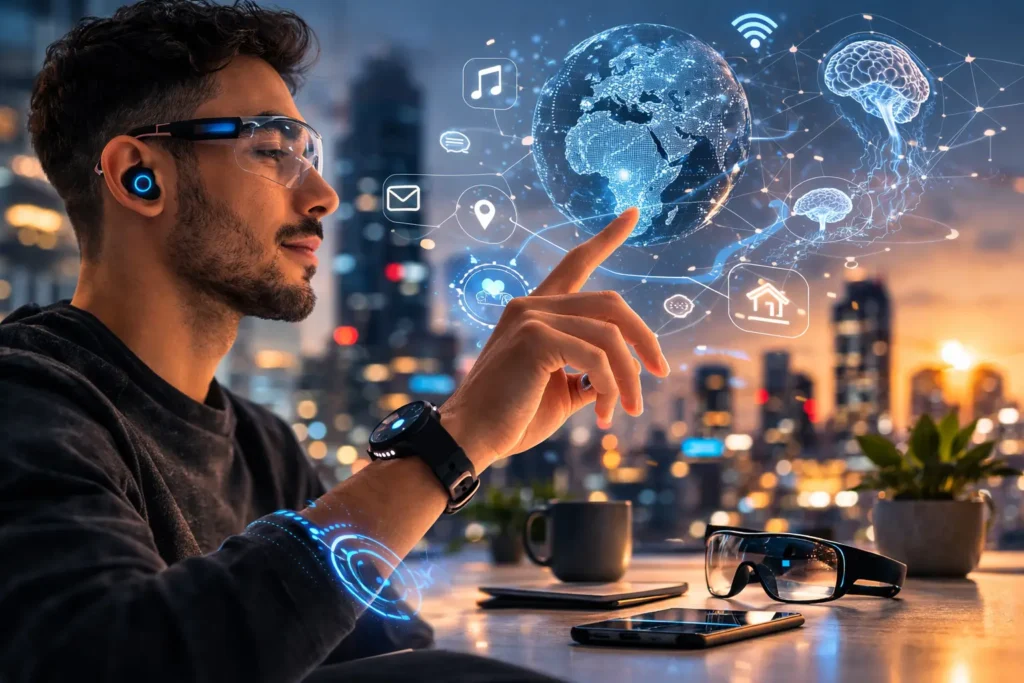
Neural earbuds and gesture tech are changing how we interact with the digital environment. We are moving toward a future where our bodies are the interface, and the physical world is the display. This is a fundamental change in our relationship with computing.
The smartphone isn’t going to disappear tomorrow, but its role as the center of our lives is ending. We are moving toward a hybrid setup where we use different tools for different tasks. The screen will be there when we need it, but it will stay in our pockets when we don’t.
We should embrace a future where technology is more human-centric and invisible. By moving away from screens, we can stay more present in our real lives while still benefiting from the digital world. The future is not about more screens; it is about better connections.
