


SpaceX is gearing up for a major milestone with its upcoming Starship test flight. This mission will mark the first attempt to deploy model Starlink satellites, demonstrating payload delivery capabilities. Successfully executing this test could reshape satellite deployment methods, advancing efficiency and scalability in the space industry.
What is the Starship’s test program?
SpaceX’s Starship test program has been marked by significant milestones in reusable rocket technology. Previous flights have demonstrated key achievements, such as catching the Super Heavy booster during its October 2024 test.
The program employs a test-to-failure methodology, pushing systems to their limits to identify areas for improvement. This allows SpaceX to validate new features under real-world conditions, reducing future risks. It has been instrumental in achieving breakthroughs that pave the way for reliable orbital launches.
In its seventh flight, SpaceX has introduced substantial upgrades to Starship’s design and performance. Enhanced propulsion systems, improved avionics, and better heat shielding are part of the new modifications. These updates aim to ensure longer missions and more robust capabilities for upcoming challenges.
Important details about the payload deployment
The Starlink simulator payloads represent a significant step in refining satellite deployment strategies. These payloads are designed to mimic the size and weight of future V3 satellites, ensuring accurate test conditions. The simulations enable SpaceX to validate its deployment systems, a crucial requirement for operational reliability.
Each simulator closely matches the dimensions of the heavier next-generation V3 satellites, which enhance network capacity. This allows engineers to assess the Starship’s capability to handle larger payloads in real-world scenarios. By matching future payload specifications, these tests provide valuable data for future enhancements.
The payloads will follow a predefined suborbital trajectory before splashing down in the Indian Ocean. This planned splashdown location enables recovery and detailed analysis of the test systems. These tests aim to refine deployment techniques, ensuring efficiency and minimizing risks in upcoming commercial missions.
Important advancements in Starship’s design
The latest Starship iteration brings several technical improvements aimed at enhancing its efficiency and reliability. Below are the key advancements and their operational implications.
- Enhanced Propulsion: The upgraded propulsion system delivers improved thrust efficiency for complex orbital missions. This enhancement supports consistent performance, even during extended flight durations.
- Upgraded Avionics: Refined avionics systems enable precise navigation and seamless communication during challenging flight conditions. These upgrades are crucial for maintaining operational control during mission-critical phases.
- Improved Heat Shield: The reinforced heat shield increases thermal protection during atmospheric reentry and high-velocity descents. This ensures durability and safety for repeated launches and recoveries.
- Expanded Propellant Capacity: The 25% increase in fuel volume enables longer missions with enhanced payload delivery capabilities. It ensures greater flexibility for diverse mission profiles requiring extended orbital operations.
- Booster Catch System: The redesigned mechanism improves recovery efficiency by ensuring controlled and precise booster landings. This minimizes operational delays, supporting rapid launch turnaround times.
Next-generation V3 Starlink satellites: What you need to know
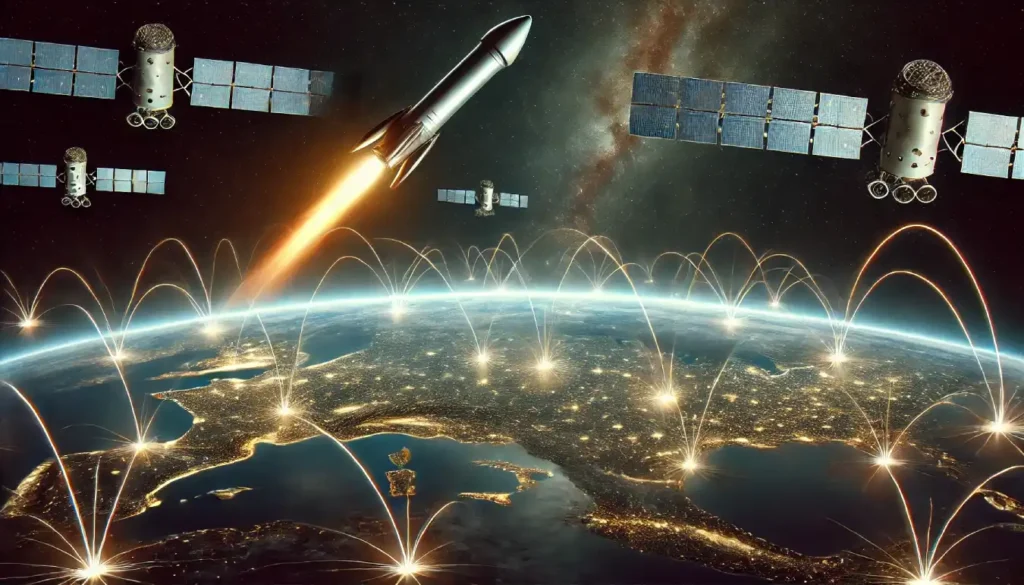
The V3 Starlink satellites represent a major advancement in SpaceX’s satellite technology. These new models aim to redefine connectivity with their enhanced performance and capabilities.
Enhanced data capacity
The V3 satellites provide improved data transfer speeds compared to their predecessors. With a tenfold increase in downlink capacity, users can expect faster internet speeds. Additionally, uplink capabilities are 24 times greater, ensuring robust two-way communication.
Massive payload delivery
Each Starship flight carrying V3 satellites can add 60 terabits per second to the Starlink network. This payload capacity allows SpaceX to expand its network coverage much more efficiently. By deploying 60 satellites at once, the constellation can scale quickly to meet growing demands.
Heavier Satellite Design
The V3 satellites weigh over three times as much as the V2 Mini models. This added weight accommodates the advanced hardware required for improved connectivity. Starship’s large payload capacity makes such launches feasible, ensuring effective satellite deployment.
Optimized network connectivity
The upgraded satellites are designed to enhance both urban and rural internet connectivity. This includes providing high-speed internet access to underserved areas. The advancements aim to improve global accessibility for users in diverse locations.
Better user experience
The new satellites promise seamless internet for applications requiring high bandwidth, such as streaming and gaming. Their robust communication infrastructure minimizes latency for a smoother online experience. This ensures users can stay connected without interruptions.
What is the role of Starship in improving Starlink’s global network?
Starship serves as a cornerstone for expanding Starlink’s global network, improving its reach and efficiency. It addresses critical challenges in satellite deployment and enables SpaceX to enhance its internet services.
- Higher Payload Capacity: Starship can carry a significantly larger number of satellites per launch compared to Falcon 9. This efficiency drastically reduces the cost per satellite, making internet expansion more feasible.
- Efficient Satellite Deployment: The advanced design of Starship supports bulk deployment of heavier next-gen V3 satellites. This process increases network coverage while ensuring quicker satellite replacements when required.
- Enhanced Network Performance: With its ability to deploy V3 satellites, Starship supports improved data speeds for subscribers. Each satellite provides more capacity, leading to better connectivity in underserved regions.
- Cost Reduction Goals: Starship’s reusability cuts down operational costs, enabling more frequent satellite launches. This reduction benefits SpaceX’s financial model, supporting competitive pricing for Starlink subscribers.
- Future-Ready Design: Starship’s capacity supports long-term goals like high-speed internet for remote and urban areas. Its scalability ensures the Starlink network can handle increased global demand seamlessly.
- Sustainability Benefits: With fewer launches needed due to Starship’s payload volume, fuel consumption decreases. This contributes to minimizing operational impact while maintaining high service reliability.
What are applications and use cases of Starship?
SpaceX’s Starship represents a step forward in space exploration and satellite deployment. Its design and capabilities make it suitable for diverse missions, from scientific endeavors to interplanetary exploration.
Lunar landings with NASA:
Starship is central to NASA’s plans for the Artemis program’s lunar exploration missions. As part of its agreement with NASA, Starship will transport astronauts and cargo to the Moon’s surface. These missions aim to establish sustainable lunar operations and pave the way for deeper space exploration.
Mars colonization ambitions:
Elon Musk envisions Starship as the foundation for creating a human presence on Mars. The rocket’s high payload capacity and reusability are essential for interplanetary travel and settlement. These missions aim to transport supplies, habitats, and passengers, making Mars a viable long-term destination.
Expanding satellite networks:
Starship’s enormous payload capacity is a game-changer for launching large batches of satellites. Each flight can deploy next-generation Starlink satellites, improving internet capacity and global coverage. This efficiency reduces costs and accelerates the rollout of advanced satellite networks worldwide.
Deep space exploration:
Starship’s versatility makes it suitable for carrying large payloads for scientific missions to deep space. Its potential to transport telescopes and research equipment can expand knowledge of the solar system. Missions could include studies of asteroids, moons, and distant planets, driving scientific progress.
Commercial and industrial missions:
Starship offers new opportunities for commercial ventures, including transporting heavy equipment or building materials to space. Industries could explore manufacturing, mining, and energy production in orbit or on planetary surfaces. These capabilities enable a range of possibilities for space-based economic activities.
Humanitarian satellite deployments:
With its capacity to deploy large satellite constellations, Starship can support humanitarian initiatives. These constellations could provide remote areas with better internet access and communication capabilities. The technology facilitates emergency response, disaster recovery, and global education programs.
What are the challenges?
The upcoming Starship test faces complex challenges that demand precise solutions to ensure success. These obstacles highlight the intricate systems and unpredictable elements involved in such ambitious missions.
- Complex Reusability: Reusing the booster requires advanced coordination and precise execution of several complex systems. Each launch tests how well the booster withstands extreme stress and intense heat.
- Booster Catching: Capturing the booster mid-descent involves precise calculations and synchronized timing with mechanical systems. Failure risks include structural damage, operational delays, or missed objectives.
- System Testing Risks: Introducing new upgrades can lead to unexpected malfunctions that challenge mission reliability. Testing these systems during a live flight adds pressure to achieve flawless performance.
- Weather Interference: Adverse weather can disrupt launch schedules and increase the risk of technical issues mid-flight. Wind patterns and atmospheric conditions require constant monitoring and real-time adjustments.
- Contingency Planning: Fallback scenarios, like directing boosters to water landings, safeguard against equipment or system failures. These alternatives prevent catastrophic losses and provide essential recovery opportunities.
What’s next?
If the deployment test succeeds, SpaceX will be positioned to advance its satellite launch capabilities. The company’s roadmap may focus on routine missions, deploying next-generation satellites to bolster global connectivity. With increased payload capacity, Starship could redefine expectations for efficiency and scalability in space operations.
This success could offer SpaceX a competitive edge over other aerospace companies in satellite deployment. By reducing costs and enhancing performance, Starship may attract a growing share of commercial payload contracts. The could reshape industry dynamics, reinforcing SpaceX’s role as a leading force in space technology.
